Category: literacy, literature, and language

  • Mixed At Most

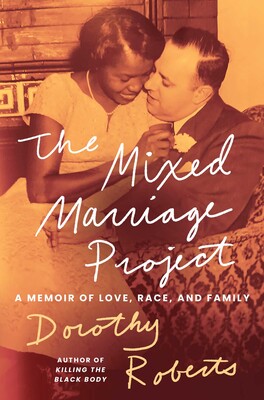
    I hoped for more from The Mixed Marriage Project: A Memoir of Love, Race, and Family, which is the most recent book from Dorothy Roberts.

    In it, Roberts, who is the George A. Weiss University Professor of Law and Sociology at the University of Pennsylvania, offers an account of the summer she spent in a rented apartment near her Chicago childhood home where she sifted through boxes of her father’s research data, which she was bequeathed after the deaths of both her parents. She reads her father’s interviews of mixed-race married couples and reflects upon discovers about her parents, her younger twin sisters, and herself.
    Roberts’s father, who had been a Roosevelt University anthropology professor, began researching black-and-white marriages as a graduate student, and had seemingly been interested in such relationships even longer. For decades, he interviewed such couples, and was regularly assisted by his Jamaican wife Iris, whom he met when she was a Roosevelt student, and later graduate students.

    Roberts recalls that family discussions often involved her father’s research, and the book he was continually writing. She learns while reviewing these documents that he had two different contracts for this book for example but had to return both advances because he never completed a manuscript.

    Other discoveries seem more significant. For example she hadn’t realized the role that her mother had played in this project or the extent to which her parents’ marriage and even their family could have been part of her father’s research.

    These and others motivate Roberts to reconsider her college choice to identify as a black woman, and deny her white father, which could explain her reluctance to acknowledge her personal experience in her lectures and books. She also realizes that her father’s and her lifelong disagreement about race and relationships has been a persistent them in her own speaking and writing.

    Her father, who she claims never imposed his belief upon her, maintained that interracial intimacy could overcome racism, and consistently tried to convince her of that. She in contrast maintained that racism would end only when people recognize others of different races as equals, which is a prerequisite she believes for love.

    Roberts ultimately reconsiders her perspective, and admits to tempering her resistance to her father’s by the end of the summer. Nonetheless, she is still less hopeful than he, and still convinced of her own account.

    Roberts is right I think insofar that this book demonstrates the damage that race as a social construct can do to relationships and families even across generations. Her father for example waited until his mother had died to marry her mother, which then motivated his brother to disown him, and prevented her from meeting her Chicago cousins.

    I also admire her candor throughout this book, and appreciate the appeal of confronting her past and understanding its impact upon her present. I additionally can understand the way that this book could be considered the completion of the task her father started but never finished.

    Nonetheless, I wonder if Roberts not unlike her father hasn’t quite done so, if she like him still has unfinished business to complete. The reason is that this book seems more like a series of notes about and reflections upon these data and her experiences and less an interpretation and synthesis of these, which are expected of memoirs.

    This book clearly has a narrative frame — the summer Roberts spends near her Chicago childhood him reviewing her father’s research data — and an overarching insight — the complication of her race-and-relationships opinion — but needs more perspective if she intends to offer an account of her intellectual and emotional transformation. Perhaps a different organizing principle, or an additional draft, would enable her to complete the task she gave herself.

    I’m convinced having been married to a Filipina for thirty years that Roberts like her father has a book here and yet needs more sifting, sorting, and synthesizing to complete it.
  • The Dope on Kids and Their Parents Today

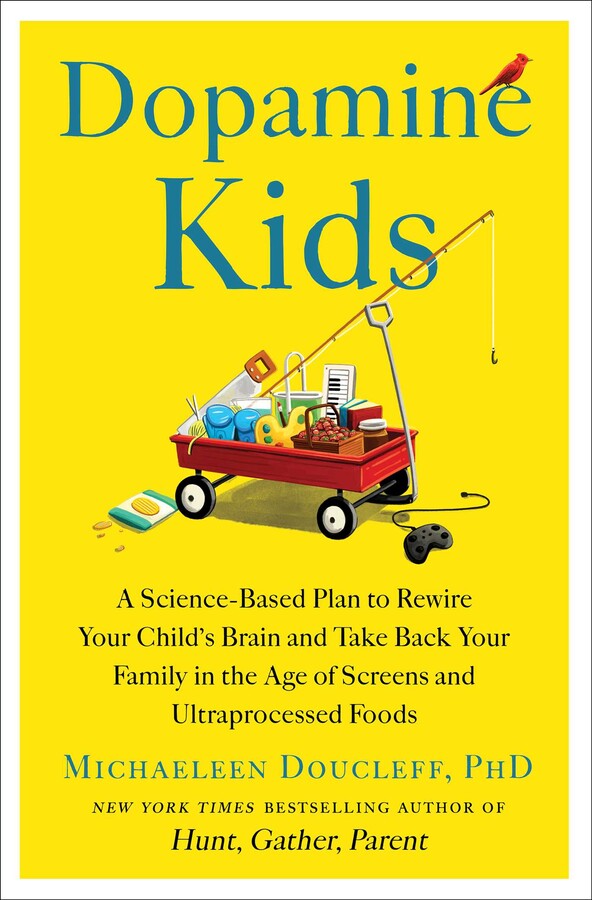
    Michaeleen Doucleff’s (2026) new book Dopamine Kids offers an alternative account of challenges confronting kids and their parents today.

    Doucleff, who has a physical chemistry PhD, was surprised to learn that dopamine isn’t a pleasure hormone as it is commonly regarded but a wanting hormone, or one that initiates cravings or urges. For her, this insight explained why would feel worse after acting on urges to surf social media for example or indulge in junk food.

    These together form the basis for this book, which is her second one about parenting. In this one, she criticizes the ways digital tech and processed food industries manipulate kids and adults, which she observed in her own home, and offers an account of her efforts, including her research reviews, to change these conditions.

    From these, she outlines a process for other parents and people who also want to disrupt their dependencies upon digital technology and processed foods. This process begins with identifying their values, selecting specific alternatives, and reinforcing these replacements and efforts.

    Central is recognizing the difference, and often the gap, between wanting and liking. The former figures centrally to the development of cell phone apps for example and snack foods, and is why such changes shouldn’t be seen as will-power problems. Regardless, this distinction Doucleff maintains can be hijacked to support such changes by reconfiguring the connection between these.

    Parents in Doucleff’s approach lead these efforts, which requires them to challenge their own choices alongside those of their children. Together, kids and their parents can disrupt their dependencies not by depriving themselves but by replacing these choices with more satisfying ones — closing the gap in other words between wanting and liking — and thus change their homes and their lives.

    This book seems to resonate with many reviewers, who like its mixture of personal anecdote, scientific research, and practical processes and strategies. I too appreciated the insight that kids and their parents aren’t surfing social media or eating junk food because these activities make us happy and the suggestion that these changes needn’t result in additional conflict or herculean sacrifices.

    I also welcome the inherent challenge that parents must confront their own behaviors and model better ones. I no longer have children at home but think this challenge nonetheless applies for anyone who lives with people whom they love and support.

    I struggled with the prominence of the personal experience throughout this book. I can see how it humanizes the author, and could even reduce any sense of superiority or arrogance. Still, I found it excessive at some points and even condescending at others.

    I more disliked its unconventional structure, which intersperses principles and practices. I again understand the argument for such an approach. At the same time, I struggled to rehearse the prior reasoning at the outset of the next theoretical, and research, section.

    Nonetheless, I think this book was well worth the effort. I wondered before I started it whether it would contain enough insights for someone whose children left years ago, and whose challenges reflect a more senior age group, but I can attest that I certainly got more than I needed and and even more than I hoped.

  • Texts Today

    I’ve had my issues with the Chicago Sun-Times, but I’m objecting this time to recent comments from one of its writers.

    Sun-Times columnist Neil Steinberg wrote one that was ostensibly about why Chicago Children’s Museum had missing lights on a recent national broadcast. He elsewhere described it as “a columny sort of column” from “a columnist for column readers,” and admitted his uncertainty whether the newspaper would even publish it.

    The reason he suggests is that its features — “something chatty, a little funny, with a voice” — represents a kind of article that is disappearing over time. He offers no evidence but should know, and probably isn’t wrong.

    Such a claim could however have made the same claim about all newspaper articles generally. Newspapers as has been reported are disappearing across the United States, in which case readers would have fewer opportunities to encounter all newspaper articles, and not just “chatty” and “funny” ones that have “a voice.”

    Steinberg is suggesting I realize that forms, or genres, of newspaper articles seem to be changing, but that again isn’t particularly insightful. The medium as media critic Marshall McLuhan explained in 1964 is its message — content and “character” — and perhaps even more so after the appearance of the internet, social media, or AI today.

    The more interesting issue I believe can be found not in Steinberg’s comment but its connotations, particularly the suggestion of nostalgia and loss. Are “columny columns” better than the versions that are placing these?

    Should we lament the loss in other words of the “something chatty, a little funny, with a voice” columns? Are columns or while we’re at it other traditional journalistic genres inherently better than other kinds, including blog posts and social media to which he also turns?

    Steinberg’s opinion I believe cannot be separated from his ideas about his reputation for example or his need for continued employment. The rest of us might have different answers, but these must be considered contexts in which genres emerge, evolve, and are sometimes even eliminated.

    Discursive changes, like those in life, are unavoidable, and conclusions about whether such changes are unproductive or undesirable are debates worth having before offering opinions even throwaway ones.