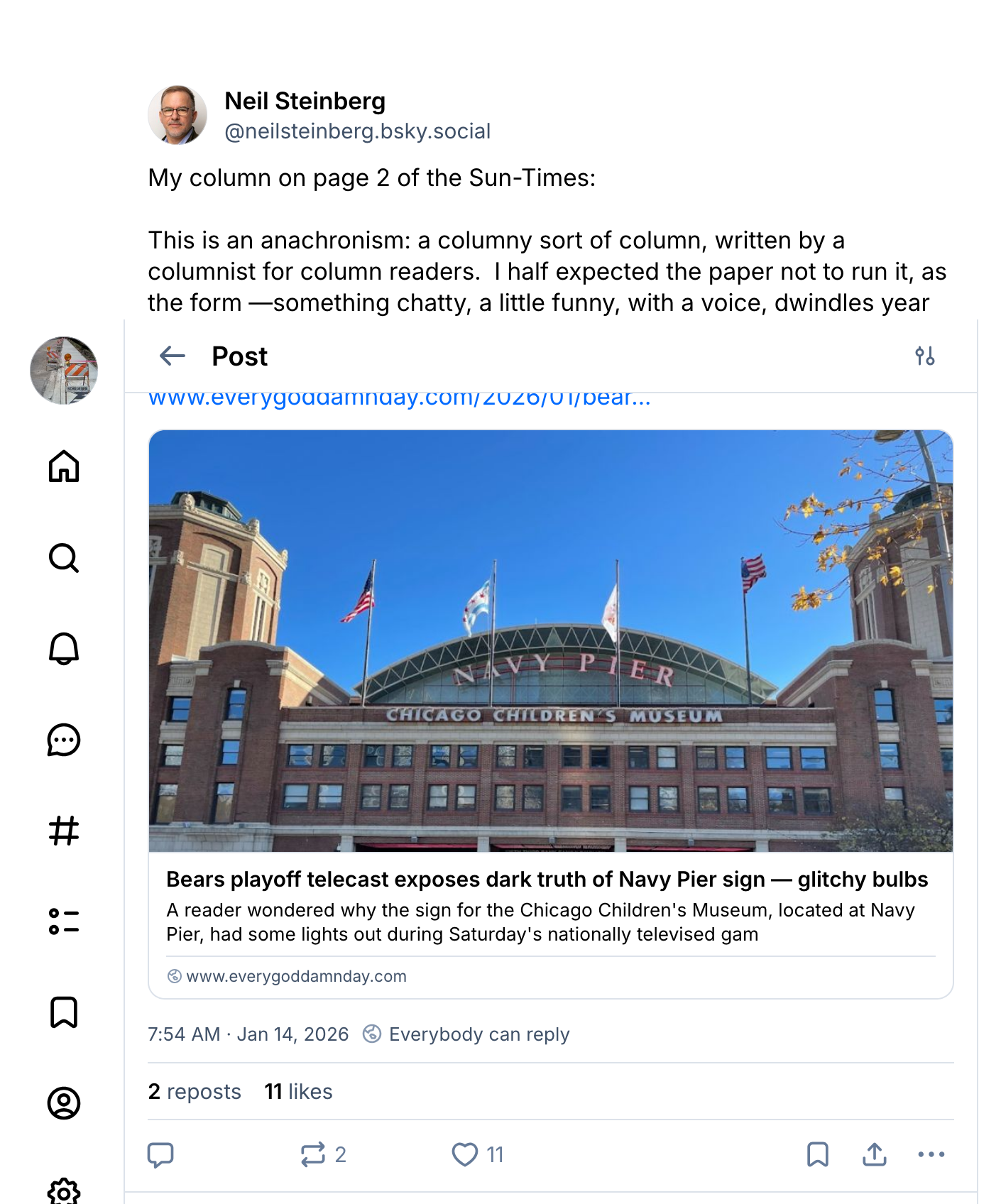
I’ve had my issues with the Chicago Sun-Times, but I’m objecting this time to recent comments from one of its writers.
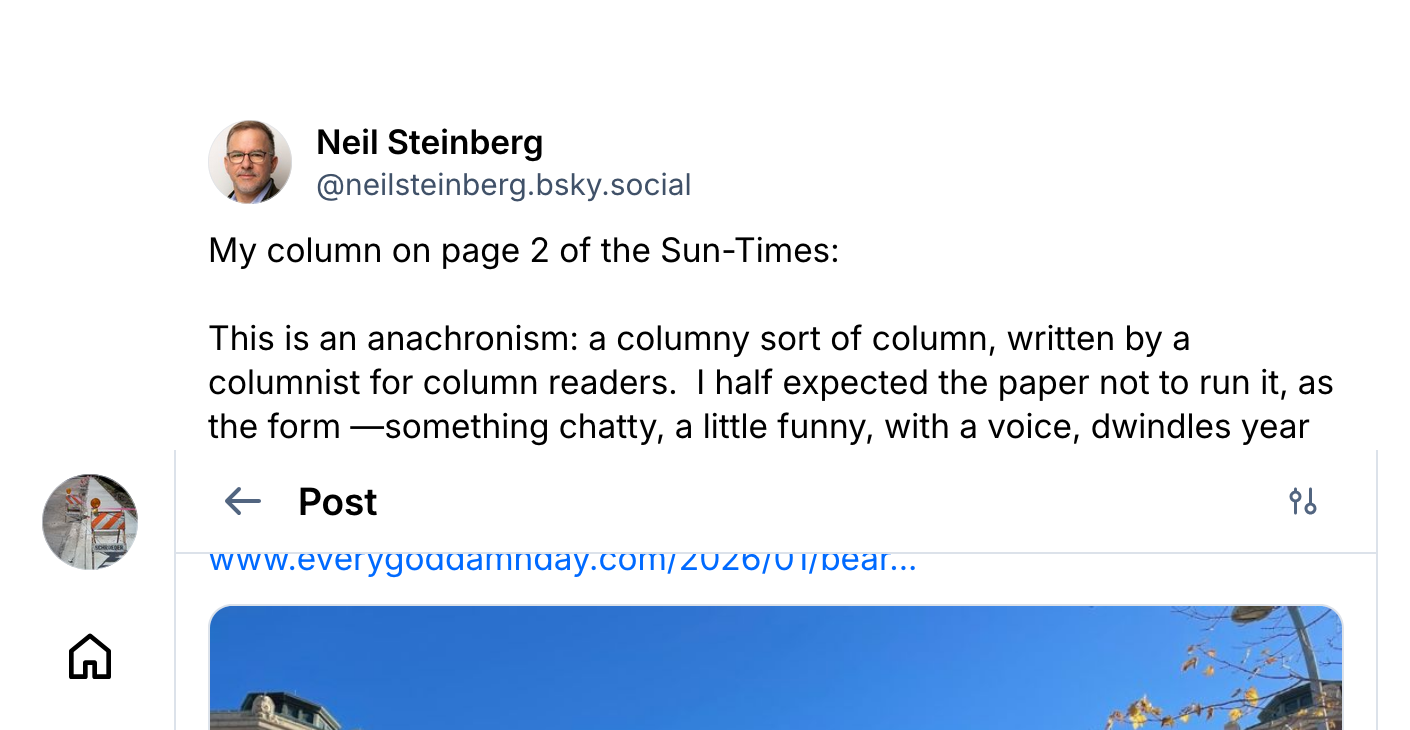
Sun-Times columnist Neil Steinberg wrote one that was ostensibly about why Chicago Children’s Museum had missing lights on a recent national broadcast. He elsewhere described it as “a columny sort of column” from “a columnist for column readers,” and admitted his uncertainty whether the newspaper would even publish it.
The reason he suggests is that its features — “something chatty, a little funny, with a voice” — represents a kind of article that is disappearing over time. He offers no evidence but should know, and probably isn’t wrong.
Such a claim could however have made the same claim about all newspaper articles generally. Newspapers as has been reported are disappearing across the United States, in which case readers would have fewer opportunities to encounter all newspaper articles, and not just “chatty” and “funny” ones that have “a voice.”
Steinberg is suggesting I realize that forms, or genres, of newspaper articles seem to be changing, but that again isn’t particularly insightful. The medium as media critic Marshall McLuhan explained in 1964 is its message — content and “character” — and perhaps even more so after the appearance of the internet, social media, or AI today.
The more interesting issue I believe can be found not in Steinberg’s comment but its connotations, particularly the suggestion of nostalgia and loss. Are “columny columns” better than the versions that are placing these?
Should we lament the loss in other words of the “something chatty, a little funny, with a voice” columns? Are columns or while we’re at it other traditional journalistic genres inherently better than other kinds, including blog posts and social media to which he also turns?
Steinberg’s opinion I believe cannot be separated from his ideas about his reputation for example or his need for continued employment. The rest of us might have different answers, but these must be considered contexts in which genres emerge, evolve, and are sometimes even eliminated.
Discursive changes, like those in life, are unavoidable, and conclusions about whether such changes are unproductive or undesirable are debates worth having before offering opinions even throwaway ones.