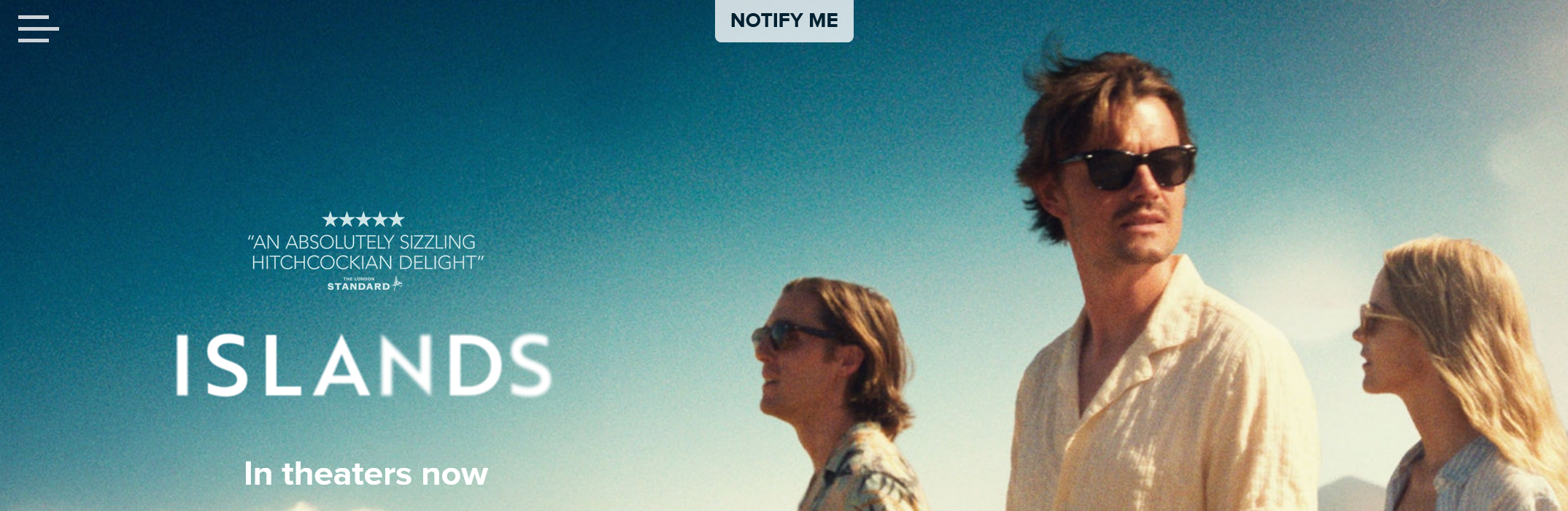
The movie Islands, which was written by Jan-Ole Gerster, Blaž Kutin, and Lawrie Doran, is an engaging exploration of appearance, reality, and aloneness that never quite coalesces into clear conclusions.
Tom (Sam Riley), a former tennis pro and current resort coach, has an apparently ideal life at least to Canary Islands tourists. The sun is constant, his obligations are limited, and even these can be avoided when he wants. Nevertheless, he suspects that something is missing, especially when a local family, with whom he has become friends, announces their imminent retirement, and return to their former homeland.
Tom soon befriends a family on holiday, who also have their own needs. They’re struggling with infertility, and perhaps infidelity, and as a result questioning their choices, including their marriage. A second child seems to be Ann’s (Stacy Martin) answer, but her husband Dave (Jack Farthing) is less certain of what they’re doing and who they are.
Tom agrees to escort Dave to a nearby club where he disappears. Any uncertainty Tom might have been feeling evaporates as he assists with the search for the missing husband, who had disclosed his suicidal intention to Ann. Tom later supplies a false, and unsolicited, alibi for, and subsequently has sex with, her.
Dave, dehydrated and exhausted, is eventually found while swimming toward a volcano where he intended to throw himself over its crater. Tom and Ann have a moment in the hospital just before she returns to Dave’s side. Tom then returns to his previous life, and recreates a former moment of glory on the courts for the latest group of mouthy, boisterous tourists.
There he passes out, and is found by Dave, who has brought the payment for his son Anton’s tennis lessons and some additional money for Tom’s efforts, including Dave tells him caring for his family. Tom in other words is still hired help whereas Dave, Ann, and their son are returning to their own lives.
Audiences are to be attracted to Tom’s experience, which has the outward appearance of Eden or heaven. The sun is constantly shining. His responsibilities are minimal, especially when he can eat and stay at the resort when he wants. He has a constant churn of female companionship and court-mates.
This movie succeeds as a psychological thriller, and also explores an almost palpable loneliness in all of their lives. Moreover, it suggests that Tom’s desperation isn’t as much malicious as perhaps opportunistic, which makes it all the more poignant.
The ambiguity almost seems borderline excessive, but the only obviously false moment is the conclusion. Tom back in his own apartment is eating the cereal he purchased for Anton when he swipes his wallet and keys and then races to the airport. Once there, he asks if he can still purchase a ticket, which he can, and then is asked to where.
Perhaps he intends to follow this family although that seems less likely than the possibility that he could be fleeing from his unsatisfying life. The details however are wrong. He seems not to have a passport for example perhaps because he in his haste left it at home.
The bigger problem is the emotional resources he will need to leave. Are audiences to think that he is ultimately incapable of escaping as his camel-farm friends did? Or that Tom has acted rashly again?
Even his front desk friend has had enough of his shenanigans. Has he learned anything from escaping his self-manufactured legal jeopardy?
Is his motivation even the point? Perhaps not, the title seems to suggest. Maybe all of us in contrast to the line from the John Donne poem are islands unto ourselves, and perhaps forever are so.
That could be the conclusion of this movie. All the ambiguity while not ruining the experience unfortunately makes that unclear.
Leave a Reply