Category: digital

  • Quite Careless Indeed

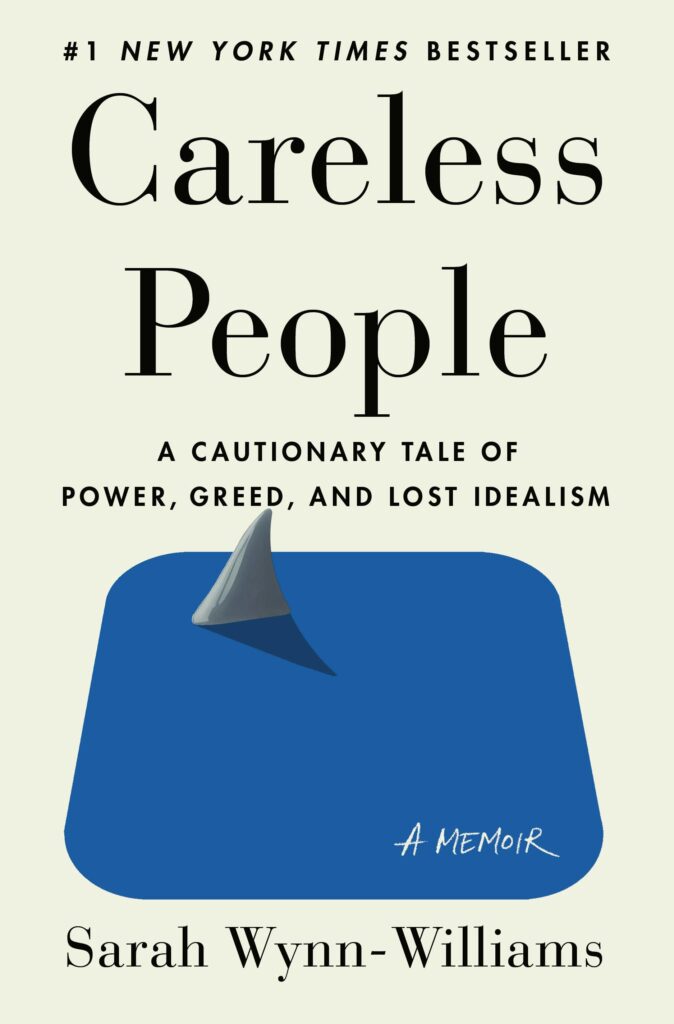
    Sarah Wynn-Williams’s (2025) book Careless People is offered as a memoir of her six years at Meta (Facebook), but it focuses as much on the people whose decisions created this company, such as Mark Zuckerberg, Sheryl Sandberg, and Joel Kaplan, who was reportedly hired to appease the Trump administration.

    Wynn-Williams, a former New Zealand diplomat, wanted to work for Facebook she explains because she believed in its potential and its power. She also recognized that this company needed a global perspective to maximize this potential for positive impact, and was eventually offered a position, which she developed in a way that allowed her to become central to its global policies.

    This focus as much as anything explains the emergency injunction won by Meta to prevent Wynn-Williams from promoting her book although that according to some only increased its sales. If so, this response obviously backfired, but that likely means more money for Wynn-Williams but does not increase the likelihood of the public benefits she once identified.

    Wynn-Williams generally knows how to tell engaging stories. Some moments are uneven, but many are engaging. I consistently wondered what happened next, and what some of these powerful yet peculiar people would say or do.

    She also if this account is accurate has admirable attributes, such as confidence, motivation, and resilience. These seem even more so in contrast with her shortcomings that she details, such as the time she stopped in the middle of labor with her feet in the stirrups to draft a requested talking points memo, and insisted despite her husband’s and doctor’s requests upon sending it before returning to the task at hand.

    This and other moments might make some question Wynn-Williams’s judgment. Perhaps most alarming was her willingness to stay in her position despite the political, social, and individual harm, such as blatant sexual harassment, that she witnessed and even experienced. These decisions some could suggest might have condoned such conditions no matter how often she cited the need of her family for health care or any increased capacity to change the company as a company insider.

    Wynn-Williams’s relationship with Meta ends when she is fired. She insists that she had wanted to leave and had been searching for another job, but some might wonder whether she would have ever left on her own volition. Such critics could cite her decision to relocate reportedly at Zuckerberg’s request, which as she admits affects not just her but also her family, or her concerns about the economic consequences if she did.

    Wynn-Williams also offers what could be considered a cautionary tale for those who might still be techno-optimists. She isn’t wrong to imagine the potential power in social media and other digital technologies. At the same time, she depicts the risks of being naive about surveillance capitalism, and especially its ability to disable this potential and exploit users.

    That perhaps is a bigger problem. Despite her engaging stories, she hasn’t provided a narrative. Many moments are engaging although according to some contain little new information, but these together are never quite connected into a sequence of events that ultimately offers useful insight about not just this author but also if readers are lucky the times or world in which we live.

    This flaw can be found even in its title, which refers to Tom and Daisy and their relationship in F. Scott Fitzgerald’s (1925) canonical The Great Gatsby. In it, Tom and Daisy are indeed careless, and even entitled, but Mark, Sheryl, and Joel in contrast seem more than careless, and rather self-absorbed, exploitative, and even ruthless in this book.

    A question I have after reading it is whether Wynn-Williams could be considered part of this problem.

  • Seductive Sirens

    I wanted to like Chris Hayes’s (2025) new book. Instead, I found myself wanting more from it.

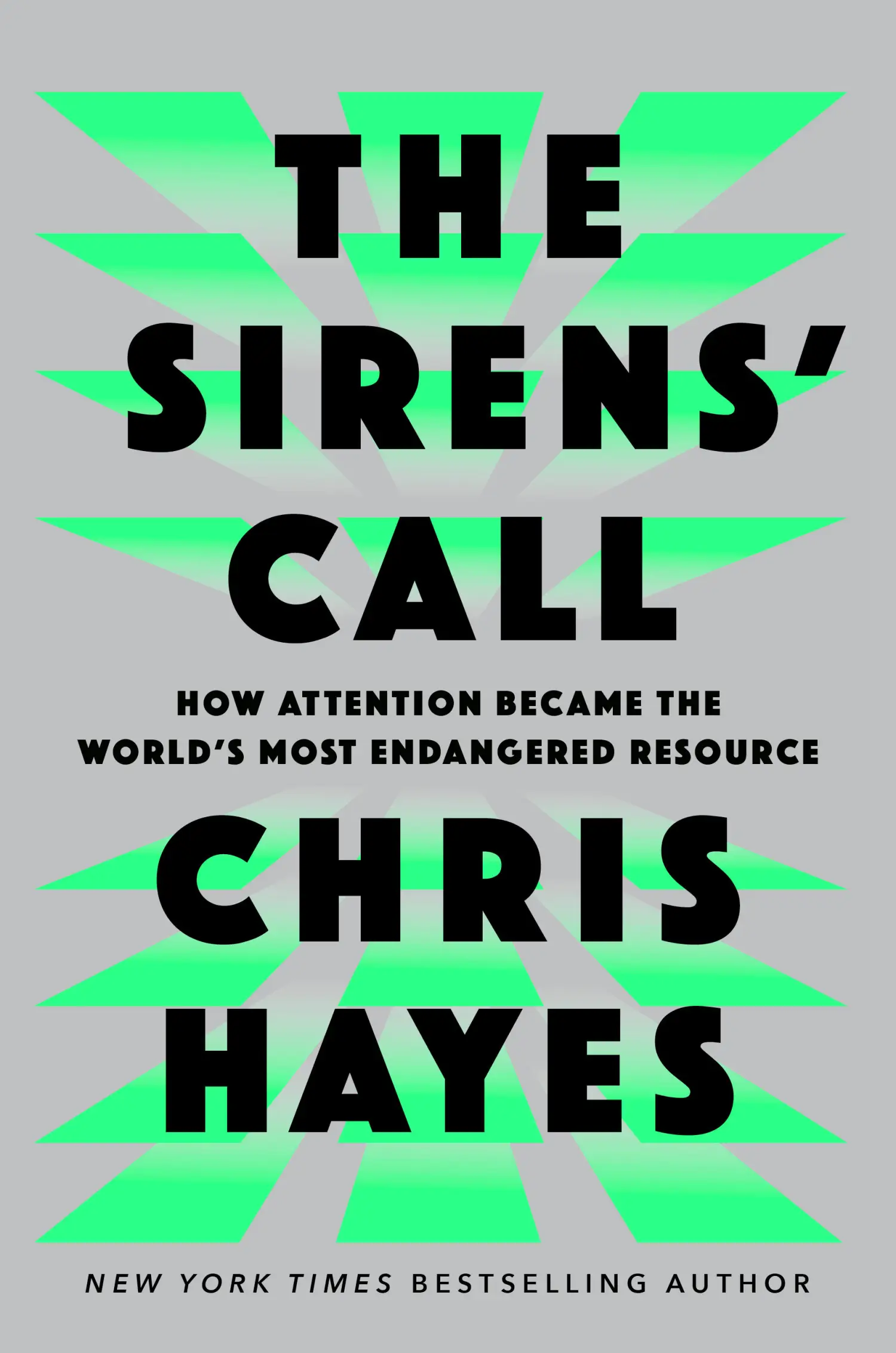
    Hayes compares the commodification of labor in the nineteenth century to the commodification of attention today. In doing so, he distinguishes among voluntary, involuntary, and social attention (27ff) and contrasts boredom and idleness (59ff) before considering the deep human desire for social attention as a remedy for loneliness, which he differentiates from solitude (81ff).

    Hayes compares the commodification of labor in the nineteenth century to the commodification of attention today. In doing so, he distinguishes among voluntary, involuntary, and social attention (27ff) and contrasts boredom and idleness (59ff) before considering the deep human desire for social attention as a remedy for loneliness, which he differentiates from solitude (81ff).

    Then he describes the attention age alienation as the unwitting extraction of human inner life, which has been transformed into a commodity (132ff). From there, he explains that information has become almost infinite while attention is finite (155ff), and that on a public scale leads to some of the worst aspects of digital life, such as trolling and conspiracies (195ff).

    As a remedy, he invokes commitment mechanisms, such as the wax and ties that enable Odysseus and his crew to sail safely past the sirens. Such remedies could be vinyl records for some or print newspapers, Reddit, or group chats for others (251ff).

    This analysis is useful as far as it goes. The historical context is invaluable, and the commodification analogy could prove to be productive despite the obvious differences between labor and attention. Both features and others increase our understanding of these issues, and the possibilities of productive responses.

    At the same time, this book relies too much on personal experience, which doesn’t necessarily invalidate any insights but does leave these underdeveloped and as a result underwhelming. It also seems in its relatively fragmented form a product of the very attention economy that he is critiquing, and that represents a discomforting lack of awareness that could challenge its credibility.

    Another draft or two could have increased the depth and synthesis of his analysis as well as enabled more developed, and useful, application. For example, it would benefit from demonstrating how his model can account for what is happening to both individual users and social spaces.

    It also needs to offer more than some strategies he has been trying. I too for example have found print to be useful, and have incorporated more of it into my daily routines. At the same time, I expect more for my efforts, especially when such involve book-length projects.

    Regardless, I think this book will be successful if it at least enables additional conversations about what these digital devices are doing to our communities and ourselves. Even if half-baked, it could be satisfying enough to make at least some reach for more.

  • Information and Attention

    “In an information-rich world, the wealth of information means a dearth of something else: a scarcity of whatever it is that information consumes. What information consumes is rather obvious: it consumes the attention of its recipients. Hence a wealth of information creates a poverty of attention and a need to allocate that attention efficiently among the overabundance of information sources that might consume it.”

    –Herbert A. Simon (1971)