Category: international

  • Theater Today

    I attended the final production of Manual Cinema’s The 4th Witch this past weekend, and was elated at the outset.

    I had forgotten how thrilling live performance can be. I unfortunately had sufficient time throughout the rest of the performance to contemplate the relative absence of theater in my life.

    Its presence dramatically diminished once I left a theater awards organization. For eight years, I had been a theater judge, and was seeing more than one hundred, and sometimes more than two hundred, different productions each year.

    I left the organization as a result of its lack of professionalism, and its resistance to professional development, and its leaders’ lack of integrity and ethics. I was also was concerned about the amount of time that I was spending at less than noteworthy productions, which were hours of our lives another judge reminded me that we’d never get back.

    For the first year or two, I resumed my theater subscriptions, which meant that I was attending fifteen to twenty performances a year. That effectively reduced my attendance rate, which allowed more space and time for other activities, but inadvertently increased the costs, which now included money. A single theater subscription, which could include four, five, or six performances, could cost several hundred dollars a season even for preview performances or midday matinees.

    These increased costs I admit could have highlighted the diminished quality, or could have made it more salient. Such a trend had been evident when I was still a theater judge, especially after the pandemic when theaters rushed to respond to the loudest calls for a more woke world.

    Such calls could have been coming from those who were first to return to theaters, or the ones who most often attended shows. Regardless, these calls seemed to pressure theaters into featuring the same systemic racism themes that had a long presence even before the 2020 “We See You, White American Theater” missive.

    Theater as the most synthetic of art forms has a tradition of featuring such themes, and pushing social and artistic boundaries. Such a tradition is evident in the United States, as illustrated for example in August Wilson’s call for tradition and change, and even here in Chicago, which has made numerous contributions to theater both across the United States and around the world.

    Post-pandemic American theater however seemed more concerned about placating patrons, and in so doing became too timid. Too often, snapping, and easy laughs, rippled across too many darkened theaters in response to one intellectually and emotionally insulting scene after another.

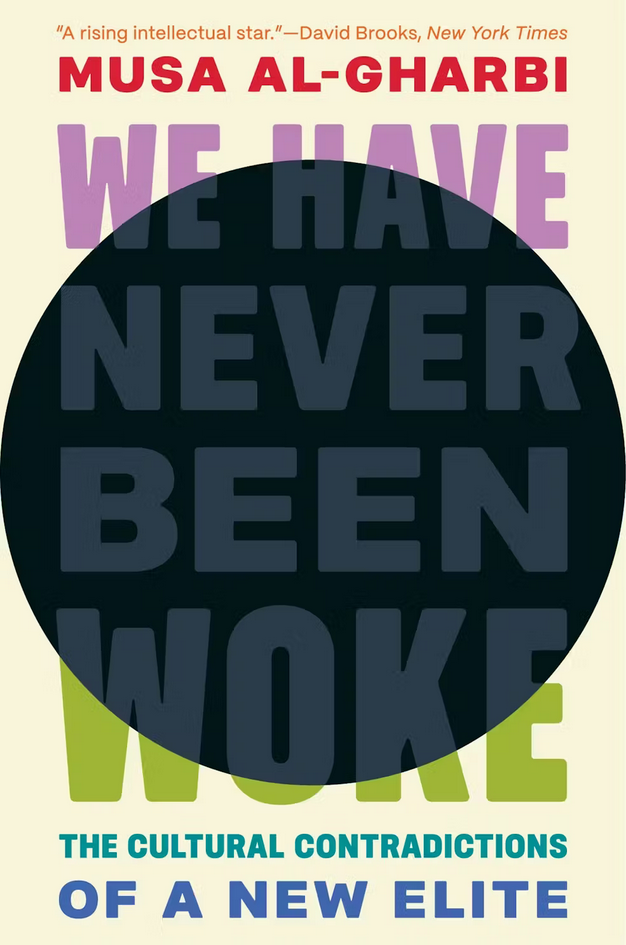
    Most theaters, or at least the ones I had long been attending, seemed to reinforce mainstream liberal mentalities, and to refuse to reckon with the never-been-woke realities of too many social justice initiatives. So I stopped subscribing.

    I still cannot rationalize these costs, especially now that I’m retired. Maybe I wondered this weekend I never will.

    The challenge confronting theaters is to some extent understandable, and a perpetual question in debates about the economics of art. Realistic answers require a careful balance of finances and function.

    Regardless, American theater could confront the political economies of theater today, and rebalance its approach in ways that don’t compromise accessibility and affordability and challenge and change. To this end, Chicago again offers ideas, such as the Hull House approach or the little theater movement in the early twentieth century or the little theater movement soon thereafter to the storefront tradition in the late twentieth- and early twenty-first centuries.

    These and other approaches offer accessible and accountable art, ones that theaters here in Chicago and elsewhere would be wise to consider. And these could mean more thrilling theater for me too.

  • Don’t Do It

    I thought that I could follow my friend’s recommendation to ignore other critics’ opinions, and would see Doin’ It, a new classroom comedy by Sara Zandieh, Neel Patel, and Lilly Singh as a result of its trailer. Maybe I was missing stuff by using aggregated critical opinion I mused that I’d otherwise be glad to have seen.

    This movie starts with Maya’s and her mother Veena’s return to the United States from India where they relocated when Maya was a precocious teen. Maya now thirty years old hopes to launch an app and her career but soon discovers her unfamiliarity with its demographic, which she can research according to her friend Jess by becoming a substitute teacher.

    Maya is hired to teach sex-ed, which is even more uncomfortable for her because she as a virgin is less experienced than many of her students. Jess offers to help her both complete her high school bucket list and develop her sexual experience, and their efforts are aided by the another new teacher Alex, a cafeteria worker named Barbara, and even her former infatuation, which also enables Maya to reconsider her app and even finding funding.

    The predicable plot includes a Dead Poet’s Society moment around sex-positivity, which both inspires Maya’s revised app and helps her regain her job. The stock characters include the tolerant and thoughtful lover, who is both the other minority (Filipino) new hire and teaches computer science, which offers them yet another connection and a potentially productive conflict.

    Maya had expected to teach computer science, so this rivalry could have added depth to their characters but does not. This missed opportunity is consistent with Maya’s larger lack of development. At no point does she reveal anything more than superficial satisfaction with her relationships, including her friendship with the mysterious cafeteria worker who befriends Maya, audits Maya’s class, reveals her hidden wealth, and ultimate funds Maya’s new app.

    Too many of the gags, which also appear in the trailer, aren’t that amusing, which doesn’t prevent them from reappearing. For example, the vibrator from Jess is misrepresented by Maya as a handheld blender, which her mother uses for their breakfast smoothie and later another for her love-interest neighbor. Its initial shortcoming only means that subsequent scenes are bigger failures.

    This movie I believe contains a larger story but never explores it. It could have been a narrative about sexual maturation in an Indian / Indian-American home or of an older or brown or older, brown woman. It could have considered emotional and physical intimacy in a continuum of relationships, especially as people migrate, age, or even relate to aging parents.

    Such a story could have offered insights about shifting notions sexuality that could be useful to anyone. None of that though and not much else appeared on the screen, which is why I slipped out of the theater as fast as I could once the credits started to roll.

  • Quite Careless Indeed

    Sarah Wynn-Williams’s (2025) book Careless People is offered as a memoir of her six years at Meta (Facebook), but it focuses as much on the people whose decisions created this company, such as Mark Zuckerberg, Sheryl Sandberg, and Joel Kaplan, who was reportedly hired to appease the Trump administration.

    Wynn-Williams, a former New Zealand diplomat, wanted to work for Facebook she explains because she believed in its potential and its power. She also recognized that this company needed a global perspective to maximize this potential for positive impact, and was eventually offered a position, which she developed in a way that allowed her to become central to its global policies.

    This focus as much as anything explains the emergency injunction won by Meta to prevent Wynn-Williams from promoting her book although that according to some only increased its sales. If so, this response obviously backfired, but that likely means more money for Wynn-Williams but does not increase the likelihood of the public benefits she once identified.

    Wynn-Williams generally knows how to tell engaging stories. Some moments are uneven, but many are engaging. I consistently wondered what happened next, and what some of these powerful yet peculiar people would say or do.

    She also if this account is accurate has admirable attributes, such as confidence, motivation, and resilience. These seem even more so in contrast with her shortcomings that she details, such as the time she stopped in the middle of labor with her feet in the stirrups to draft a requested talking points memo, and insisted despite her husband’s and doctor’s requests upon sending it before returning to the task at hand.

    This and other moments might make some question Wynn-Williams’s judgment. Perhaps most alarming was her willingness to stay in her position despite the political, social, and individual harm, such as blatant sexual harassment, that she witnessed and even experienced. These decisions some could suggest might have condoned such conditions no matter how often she cited the need of her family for health care or any increased capacity to change the company as a company insider.

    Wynn-Williams’s relationship with Meta ends when she is fired. She insists that she had wanted to leave and had been searching for another job, but some might wonder whether she would have ever left on her own volition. Such critics could cite her decision to relocate reportedly at Zuckerberg’s request, which as she admits affects not just her but also her family, or her concerns about the economic consequences if she did.

    Wynn-Williams also offers what could be considered a cautionary tale for those who might still be techno-optimists. She isn’t wrong to imagine the potential power in social media and other digital technologies. At the same time, she depicts the risks of being naive about surveillance capitalism, and especially its ability to disable this potential and exploit users.

    That perhaps is a bigger problem. Despite her engaging stories, she hasn’t provided a narrative. Many moments are engaging although according to some contain little new information, but these together are never quite connected into a sequence of events that ultimately offers useful insight about not just this author but also if readers are lucky the times or world in which we live.

    This flaw can be found even in its title, which refers to Tom and Daisy and their relationship in F. Scott Fitzgerald’s (1925) canonical The Great Gatsby. In it, Tom and Daisy are indeed careless, and even entitled, but Mark, Sheryl, and Joel in contrast seem more than careless, and rather self-absorbed, exploitative, and even ruthless in this book.

    A question I have after reading it is whether Wynn-Williams could be considered part of this problem.