Tag: apple

  • The Neo Danger

    The MacBook Neo by all accounts is amazing.

    This newest Apple laptop, which consists of MacBook Air compromises for a much more affordable price, has been praised for its performance, build quality, and value. The demand for this “perfect compromise” even surprised Apple, and reportedly contributed to a record number of new customers.

    MacBook Neo website screenshot

    The Neo has few competitors among Windows budget laptops at least at the moment although it could motivate Lenovo for example or HP to improve its offerings. It has next to none among Chromebooks, which are little more than surveillance browsers without the Linux virtual machine option, and still nowhere close with it activated.

    For these and other reasons, the Neo laptop will attract individual users, especially those who already have iPhones and AirPods or Apple Watches but before now couldn’t justify a thousand dollars or more for an Apple laptop. It will also likely have an increased appeal to institutions, such as schools and small businesses, as a result of the same reasons, including the network effect.

    With it, Apple is extending its reach into hardware, which has always been its focus, and adding this extension to its software, platforms (FaceTime, e.g., or iMessage), and services (iCloud, e.g., or Apple TV). As a result, Apple is consolidating its control, and slowly but surely becoming the primary portal through which people access digital networks.

    Such a consolidation challenges adversarial interoperability, or the cooperative potential of different devices and platforms even without the consent. This condition, which has long been considered a threat by Apple, is both central to the invention of the internet (Berners-Lee 2025) and possible remedy to its chronic devolution (Doctorow 2025).

    This consolidation also promotes its colonization of psychological, social, and cultural spaces, which should be increasingly evident. More and more people are walking or worse driving for example while messaging, surfing, or talking as a result of Apple devices. Too many if you ask me seem enthralled with immersion, subjectivity, and other cultural immediacy features that have been promulgated by these devices.

    Some might be more or less alarmed about a human future that increasingly exists within digital networks. Regardless, all of us can be concerned with the way that Apple has positioned itself to exert the greatest control and make the most money, which only compounds its control.

    None of us can dismiss this dependency no matter how much Apple promotes user privacy for example or environmental stability or otherwise presents itself positively to the world. We cannot be confident that it will continue to promote these or other prosocial practices, especially if or when sales start to slump.

    The Apple MacBook Neo in other words might be amazing but upon second thought is also alarming because it contributes to the degradation of digital networks and encourages digital dependency.

    Equally alarming is that such second thoughts might not disqualify the MacBook Neo as my replacement laptop when I need a new one or worse before then.
  • A Bigger Bite

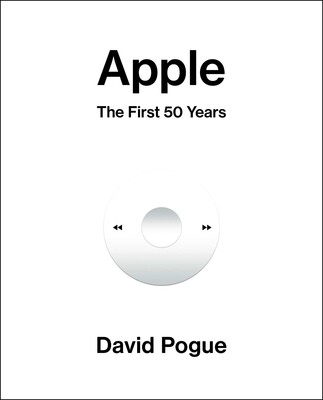
    The recent of history of Apple by tech and science writer David Pogue is a useful addition to accounts of this company that initially seemed unremarkable, later seemed doomed, and yet has transformed human experience, and continues to do so.

    Pogue conducted 150 interviews for this coherent, and credible, account of what could be the most influential of the MAGNA (FAANG) companies. This review also clarifies misunderstandings and adds insights for a more comprehensive of the first US company with a $1 trillion valuation (2018), which rose to $4 trillion last fall.

    Pogue’s seeming exhaustive account is deeply detailed, and its lavish production quality reflects the Apple aesthetic. Glossy pages feature appealing layouts with big blocks of texts and frequent sidebars, which sometimes seem gossipy and occasionally disruptive.

    Many regard this extensively sourced book as serious journalism that will appeal to tech and business readers. Apple fans I believe will appreciate the deluge of information, and anyone whose impressions begin with the first iPhone (2007) or even the “Think different” campaigns (1997-2002) will be able to add to their understanding of this global company.

    An obvious limitation, which applies to most print products, is that it is relative static, which means that it is already outdated. Its release for example was soon followed by the announcement of the current Apple CEO Tim Cook’s imminent retirement and its next CEO John Ternus, whose hardware background could alter the trajectory of this company.

    A bigger problem in my opinion is the way it most avoids larger contexts that would situate Apple in relation to other Big Tech companies or even internet history. These contexts could consider the effects of Apple products on users for example or cultural norms.

    This issue can be illustrated in the expansion of corporate control over hardware and software with iTunes (2003), the App Store (2008), and iCloud (2011), which included streaming services in Apple Music (2015) and original content with Apple TV+ (2019), and which were bundled as Apple One (2020). Apple in doing so isn’t different from other Big Tech companies, and yet by combining hardware, software, platforms (iMessage, e.g., or FaceTime), and services is more effective and I believe more dangerous.

    I appreciate the account of this company from its founding by Steve Jobs, Steve Wozniak, and Ronald Wayne in 1976 and its later struggle with Microsoft over market share and even itself over product clarity. At the same time, I expected more, such as the way it locks users into its products and exploits network effects that can harm not just the internet as others (e.g., Doctorow 2025) suggest but also I would add users, culture, and society.

    That however would be a different book, and might require a different author. The question of whether long-form journalists who offer histories have the same obligations as historians is a debate for a different forum and different day.

  • Beware Apple Buyers

    Apple wants to be seen as the more privacy-protecting alternative.

    It publicly acknowledged this issue in a 2014 open letter from its CEO. Since then, it has introduced features that limit others’ access to user data, and used these as part of an ad campaign (Leswig 2021).

    Apple even considers privacy in its own words to be a “fundamental human right,” and calls it a “core” design value and a company-wide belief.

    (more…)