Tag: artificial intelligence

  • Just What The Doctor Ordered

    Just What The Doctor Ordered

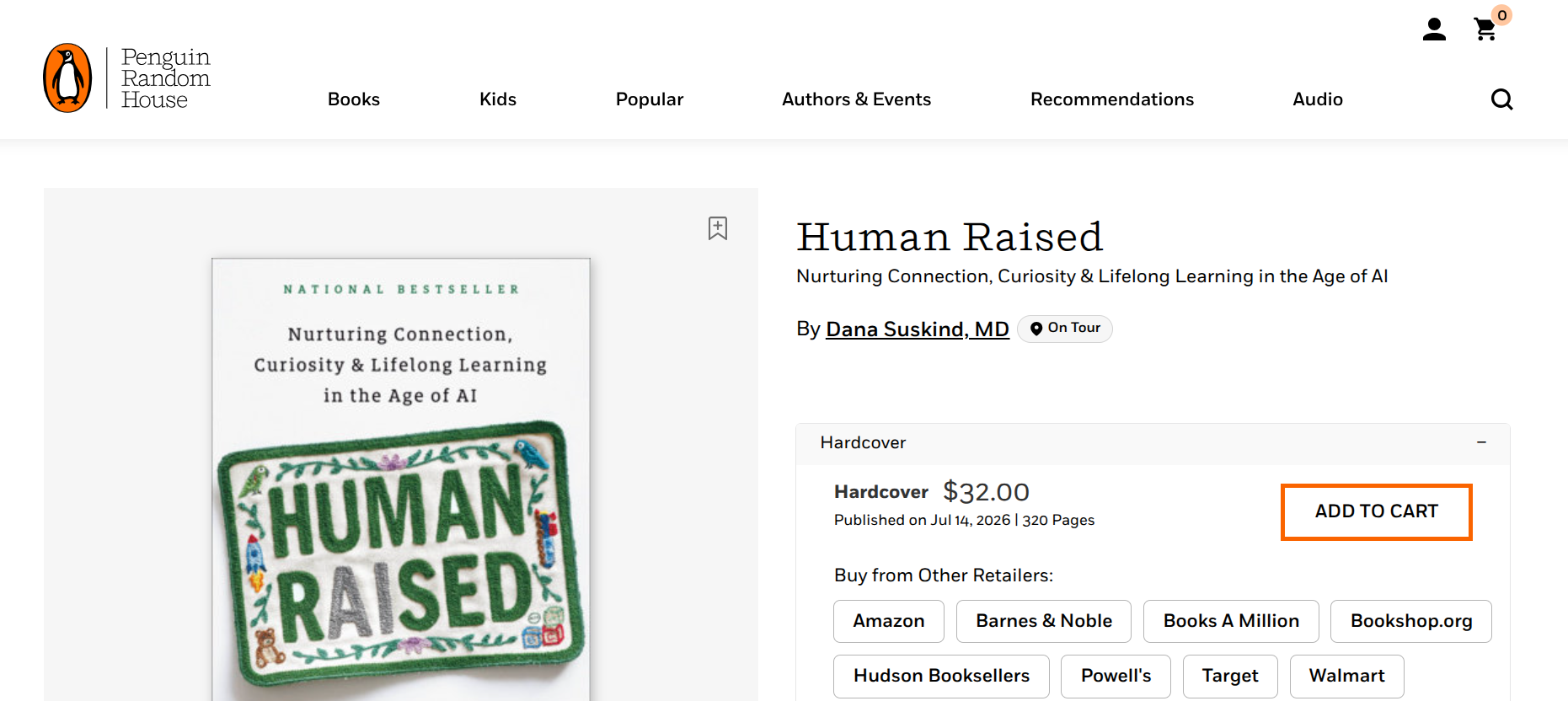
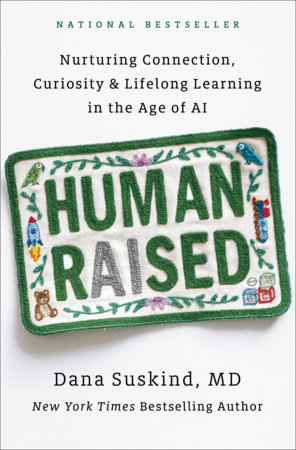
    Dana Suskind’s latest book Human Raised: Nurturing Connect, Curiosity, & Lifelong Learning in the Age of AI might target parents but offers insights for all of us.

    Suskind, who is also a University of Chicago surgery and pediatrics professor, encourages parents to foreground the irreplaceable human connection, own their parenting imperfections, protect their kids’ early years, and limit AI to enhancing adult-child interactions, or HOPE. She also describes ways that AI can support parents and newborns with language learning or sleep habits as well as reduce demands on both busy parents and overburdened teachers.

    Suskind’s expertise and experience establish a compelling context for this project, and her voice is immediately noticeable. She integrates research and experience, both professional and personal, with an engaging personality in ways that will appeal to, and engage, her intended audience.

    publisher cover image

    The effect is an established authority that commands attention yet remains accessible and compassionate. As a result, her perspective and approach, which consistently position parents at the center, are compelling and convincing. In these, AI functions as a powerful tool that serves human ends rather than dictates or worse determines these.

    Suskind repeatedly encourages parents to retain their instincts, and refuses to relinquish these to not just AI agents but also pediatricians. She also models her perspective in the ways that she owns her own parenting imperfections, which she incorporates into her argument for doing so.

    Artificial intelligence Suskind acknowledges encourages users to expect perfection. Parents however should understand that their failures, and what follows, are ways that their children develop crucial life skills, such as individual resilience and relationship repair.

    This argument can reassure new parents, who can use it to calibrate their own criteria, and even older ones, including those who have grown children as I do. I’ve suggested to my spouse that we were good enough parents, which was more than enough, but Suskind offers an even more compelling argument for such parenting as even more.

    This example suggests the larger appeal of this book. It caught my attention because I have been searching for first, or foundational, AI principles, and wondered if despite its intended audience it would suggest some. From it, I learned a way of thinking about both my parenting and my AI approach, which is even more than I hoped.

    AI according to Suskind should never substitute for human connection, imperfection can trump efficacy and efficiency, certain parts of human experience must be protected, and our efforts can be usefully enhanced with smart strategies.

    These insights are useful for raising kids, and living, in a world of artificial intelligence.

  • An Internet For All

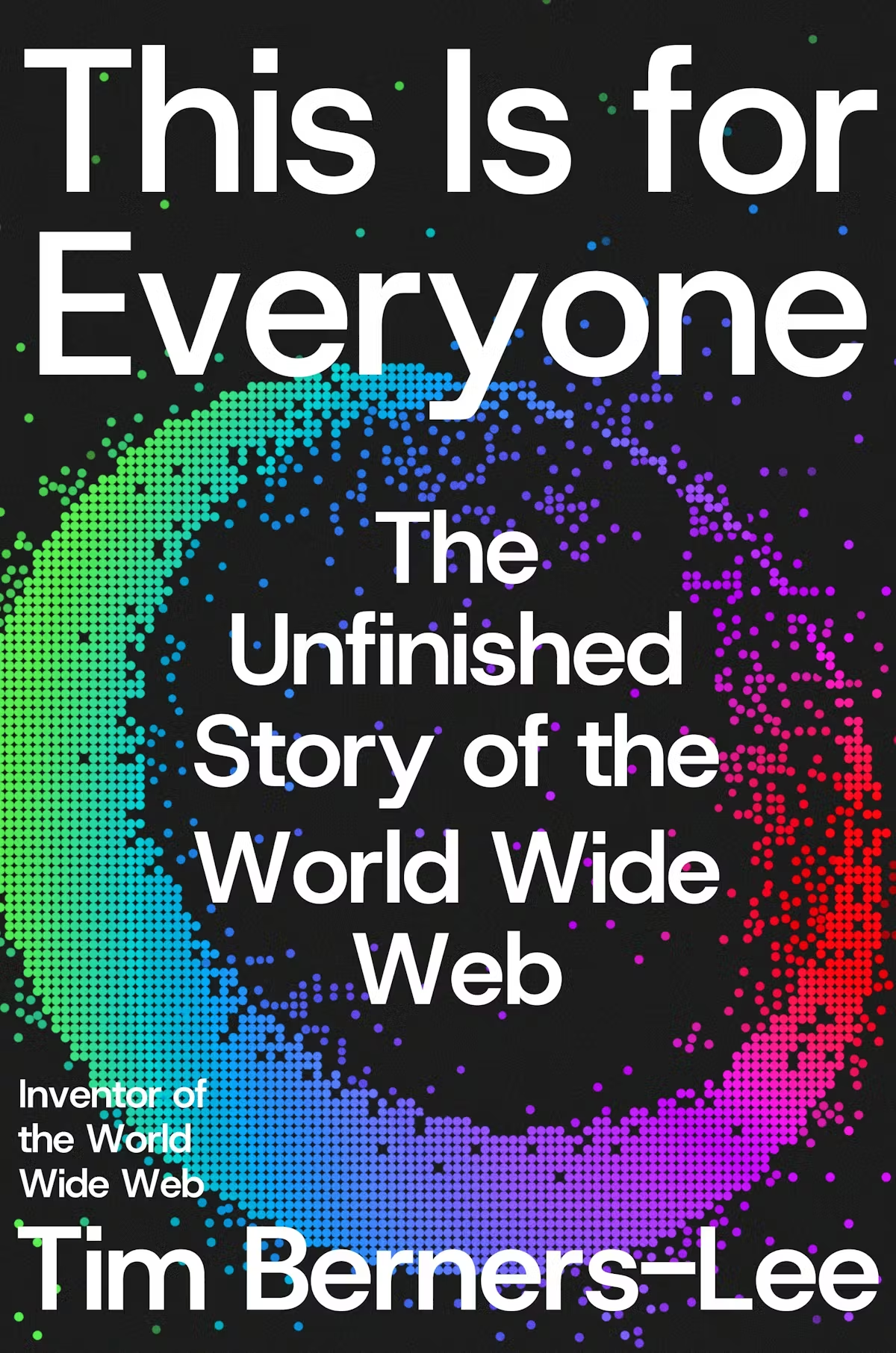
    Tim Berners-Lee’s (2025) recent memoir, which he co-wrote with Stephen Witt, is an invaluable account of the invention of the internet and useful counterbalance to mainstream accounts of it.

    Berners-Lee recounts his experiences from imagining a world-wide web, convincing CERN administrators in 1989 to support his proposal, and its stunning evolution since then into the backbone for contemporary digital life. He also considers other central concerns, such as content moderation, platform monopolies, and artificial intelligence, along the way.

    Central to this account are the central principles in Berners-Lee’s original vision. This vision was, and still is, an open network as a positive tool for human connections that is available to everyone, and not controlled by any single institution or individual.

    I was elated to learn that the internet inventor is still promoting an open and accessible space. He touts for example open-source software and federated platforms, such as LibreOffice and Mastodon, and he is developing personal data pods or wallets, and in so doing promoting data sovereignty.

    I was particularly interested near its end by his distinction between attention and intention economies, or what we’re currently experience and what he envisions for us. In doing so, Berners-Lee rejects both AI-doomers and AI-boomers — he acknowledge challenges and dangers, and criticizes the profit-driven approaches, but embraces the relative advantages — and advocates for in an AI-era reset.

    I found the rhetorical approach to be too episodic at times. One moment is followed by another and then another, and these are compiled and then offered as significant, and too infrequently connected to larger themes.

    I wanted more interpretation, synthesis, and conclusion from such a visionary and hopeful thinker. That though doesn’t mean he isn’t offering a vision of a different digital world, one that is also evoked by recent antitrust lawsuits against Google for example and Apple and successful verdicts against social media companies.

    Surely the one who imagined a networked world must be proud of his creation, and those who continue to develop it.