
Tag: encore career

  • Why We Work and What We Need

    Why We Work and What We Need

    Don’t retire, says oncologist, bioethicist, and Affordable Care Act advisor advisor Zeke Emanuel in his new book. This recommendation, which is considered his most controversial, reflects the reality that jobs provide purpose, structure, and socialization, which must be replaced by those who do decide to retire or otherwise leave the workforce.
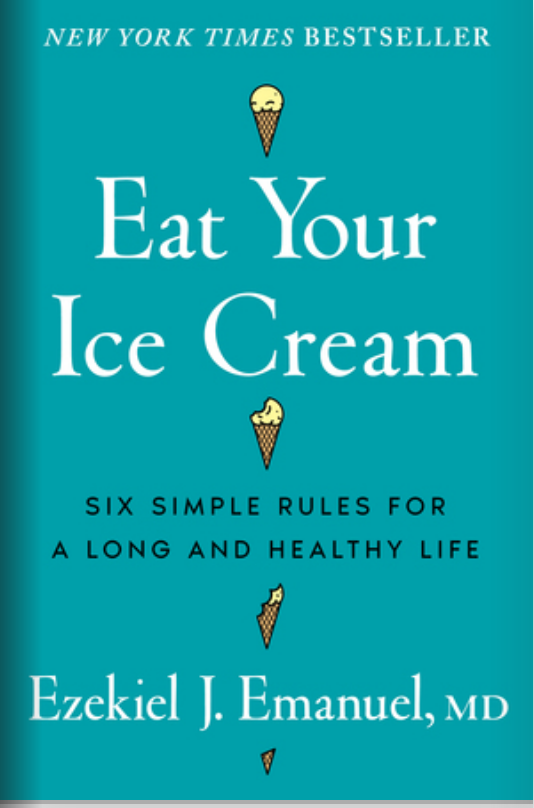
    Emanuel reportedly wrote this book as a result of his frustration with the wellness industry that he argues offers unproven, and expensive, health recommendations, such as the recent peptide craze. Emanuel instead wanted to provide a science-based, and straightforward, approach to healthy living, such as sufficient and satisfying sleep, healthy and balanced diet, and adequate physical activity.

    Emanuel isn’t wrong about the part jobs can play in preventing cognitive decline. However, he overlooks the precarity and other risks of anchoring purpose, structure, and socialization to employment for anyone, including older workers.

    Perhaps this suggestion reflects the challenge of find these elsewhere as my retirement experiences revealed. Other retirees seem to have similar challenges finding encore careers, which are often more about impact instead of income.

    Such pursuits needn’t be as elaborate as the ones at Harvard for example or Stanford where participants spend a year and $50,000-$60,000. Still, more options, or sources of structure, purpose, and socialization, need to be available for everyone, including older people.

    Otherwise, our society risks more widespread cognitive decline, especially given the numbers of Baby Boomers and Gen Xers. These might feel more pressure to stay in jobs, and spending the one life they get doing something that should be a means, and never an end.

    That could actually apply to all Emanuel’s recommendations as well.

  • Encore or Expected?

    This week is my first week of retirement, and I’ve been wondering for the last nine months or so what comes next. I certainly understand the appeal of a leisure life. I also believe that I have ten or more potentially productive years.

    Some suggest that an inevitable professional decline starts sooner than most think (Brooks 2019). Others report that some people pursue other meaningful work in their later years (i.e., encore careers), and that older people can continue to create, learn, and grow throughout their lives (Brooks 2023, e.g., or Rauch 2024).

    I hadn’t expected to retire as an academic. I just needed a smart strategy for repaying substantial student loans, and then I assumed I would do something else.

    I had entered universities in 1988 as a student and have never left. I started teaching college courses in 1994, was offered my first professorship in 1999, and have been a tenured full English professor for the last fifteen years.

    I decided to stay after repaying those loans to help our recovery from the Great Recession, cover our kids’ college costs, and fill our retirement fund. Then I realized about a year ago that I finally had a choice: I could continue what I was doing, or I could do something else.

    I not only had stayed somewhat longer than expected but also had an unexpected crisis of academic faith. Its cause was unclear, but its existence was undeniable.

    Too many unstable students and uncourageous administrators. Too much professional excess that produced a social and political backlash, and contributed to the rise of a vindictive presidential administration. Too expensive dues for a union that wouldn’t always advocate for its members.

    For these and other reasons, a better life seemed to be one after academia, which again was something I had always assumed but never developed in any detail. Nothing in my professional training, or PD since then, had encouraged such aspirations.

    Perhaps we need to reimagine the career concept, and not just academic ones, and to encourage a second part, or something more to do with our working days. Such an approach would mean that workers do something now, and something else later, and perhaps even something after that.

    This approach might be easier if workers had purpose statements, and amended or revised these over the years (see, e.g., Stretcher 2016). Such statements could contextualize our current and future choices, including ones about work.

    That would mean that careers were constructed not to conform to traditional and conventional patterns but to reflect, and respond to, our personal values and goals. These “encore” careers in other words would become expected chapters in larger stories about working and living.