Tag: Indivisible

  • If We Can Keep It

    If We Can Keep It

    I didn’t expect to be politically re-energized again.

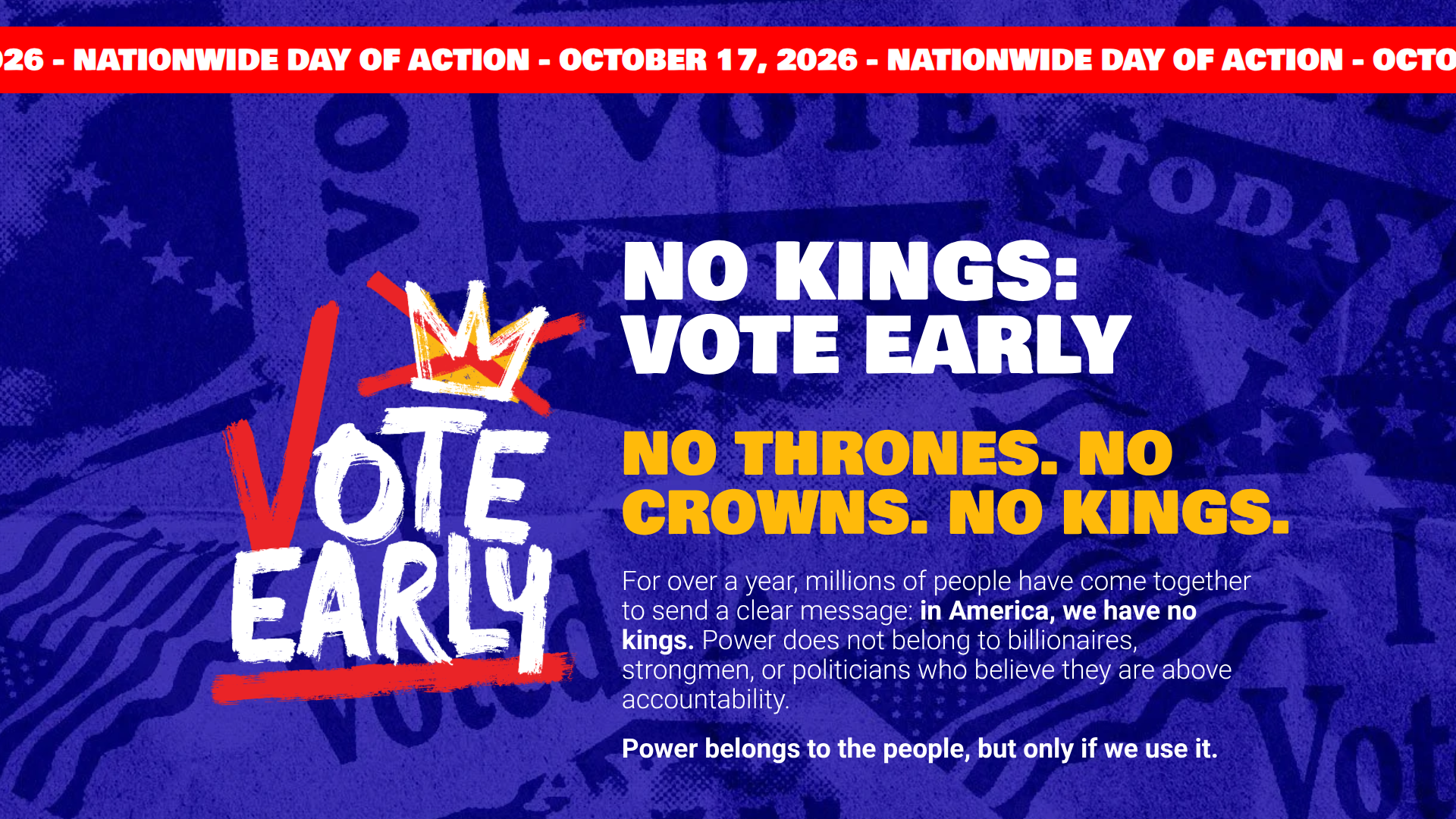
    I was, and still am, confused and curious about the next No Kings initiative of “hyper-local actions” alongside larger gatherings. I can understand the Indivisible mid-term optimism as a result of current polling data, Trump’s alienating actions, and its hope strategy but cannot ignore that I’ve been here before.

    I naively hoped that the first rally (April 2025) would capture politicians’ attention and compel substantial responses. I was more and more discouraged after subsequent rallies (June and October 2025 and March 2026).

    I objected to the way that Indivisible deployed a similar exclusionary strategy as others who critiqued mainstream Democratic leadership. I agree with the need for this specific critique, and support such critiques generally, but I wish liberals would lose their purity tests, and their political hypocrisies, and instead emphasize cross-community coalition-building.

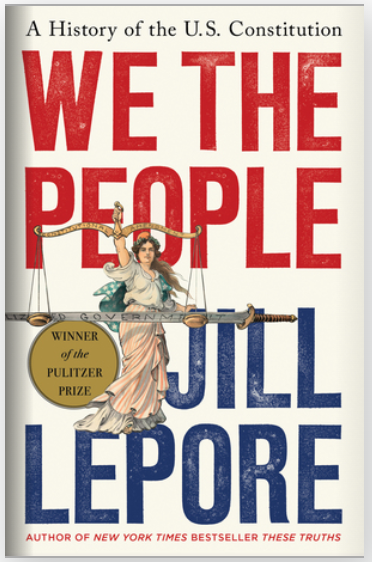
    Then I read Jill Lepore’s most recent book about the Constitution. This book, which won the 2026 Pulitzer Prize for history, offers an account of this foundational document that focuses on the part played by people in the pursuit of a more perfect union.
    The Constitution according to Lepore was designed as both a resistance and means to change. Central was the assumption that this document would not be preserved in its original form at all costs but that it would consistently and constantly updated and changed through amendments and other ways by the American people.

    Such a perspective, which she painstakingly establishes, is also clear in her critique of originalism. This interpretive strategy, which is predicated upon the search for the original intention or meaning, reinforces the impression of an artifact or relic to be preserved rather than a principled process for adaptation and change.

    This book, which some consider Lepore’s best, isn’t my favorite one of hers. Nonetheless, it convinced me that the American political system is a participatory sport, and not something seen from the sidelines.

    And it restored my motivation to reconnect with No Kings, Indivisible, and other political organizations that are calling out and challenging the corruption of this current administration, its Congressional enablers, and my fellow Americans who voted for them.

    Benjamin Franklin’s qualified answer to that Constitutional Convention question seems as relevant today as ever.
  • A Less Divisible Indivisible

    The progressive organization Indivisible, which started in 2016 as a response to Trump’s first election, persuaded more than 7 million people to march against the authoritarian actions of his current administration. However, it is risking this success with its recent response to the votes about reopening the federal government.

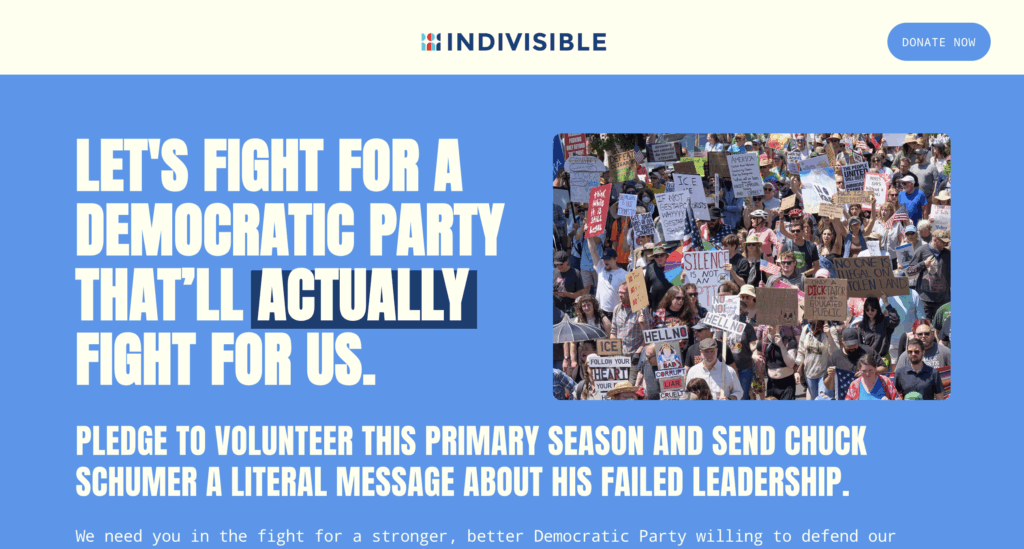
    This organization claims that those who marched “have been failed by the Democratic leadership again” and that the Senate minority leader has “surrender[ed].” It also argues that its members “must ensure” that this “failed leadership” doesn’t “doom a future Democratic majority” by participating in its latest primary election initiative.

    Democrats can, and should, do more to oppose this “authoritarian regime,” but Indivisible in this instance is promoting an incomplete perspective. For example, it assumes that Democratic leaders could control the outcome, which is unclear, and that such votes were mistakes.

    Reasonable liberals could have a different explanation. Some for instance might think that the Democrats tried “to protect the American people” from MAGA and the Republicans who refused to negotiate, and these politicians rejected “minor concessions,” which actually don’t address the underlying health care problem, and that they accepted the political realities and agreed to reopen the Republicans’ government (Gorn 2025).

    The reality is that options available to Democrats are limited at least until they are the majority in at least one house, including the White House, or until they can convince their Republican colleagues to prioritize principles over party, which is actually the same mistake Indivisible seems to be making.

    Indivisible web site screenshot

    The problem in other words is that Indivisible is using unrealistic and unresponsive language, and in so doing seems to have switched its focus from principles to parties.

    Indivisible and other progressive organizations must remember the realities of limited attention and air time, and in so doing select issues that have the widest appeal. The issue isn’t that representation doesn’t matter, which it obviously does, but that success cannot come from identity politics, especially the kind that appeals to small segments of society.

    These organizations would be smarter in other words to focus on the issues and principles that cross current divides and speak to the most people. In doing so, these organizations need to make such arguments, and to explain why caring for communities is always better in both practical and philosophical terms for everyone.

    Such frames and arguments might differ from one part of the country. What works in New York City for example might not work in New Jersey or Virginia. Regardless, the underlying (progressive) principles would remain the same concerns for community, which exist in foundational American texts.

    This approach increases the appeal to voters while continuing to expand coalitions, and actually is why these organizations must support competitive elections and fair maps once the recent gerrymandering surge has subsided (see, e.g., these or these).

    These together increase the chance that organizations are less likely to get lost in litmus-tests, which are often a proxy for party over principle, and more likely to have repeated and regular success. These moreover could encourage candidates to connect with their constituents through progressive principles rather than political party.

    Indivisible has brought hope to many of us, which was actually the best part of the recent No Kings marches. Standing among the thousands in Grant Park, I was reassured that so many people shared these concerns and aspirations and care about Chicago and our country.

    Perhaps that explains why I’m concerned about its seemingly unrealistic and unresponsive language. Instead, I urge it to avoid criticizing political parties, and risk reinforcing existing divisions, and instead refocus on creating the largest coalition, one of we the people that was central to who some imagined we could be, a people who were in this fight together, still trying to form a more perfect union.

    That is what Indivisible has done so well, and what it does best.