Tag: politics

  • If We Can Keep It

    If We Can Keep It

    I didn’t expect to be politically re-energized again.

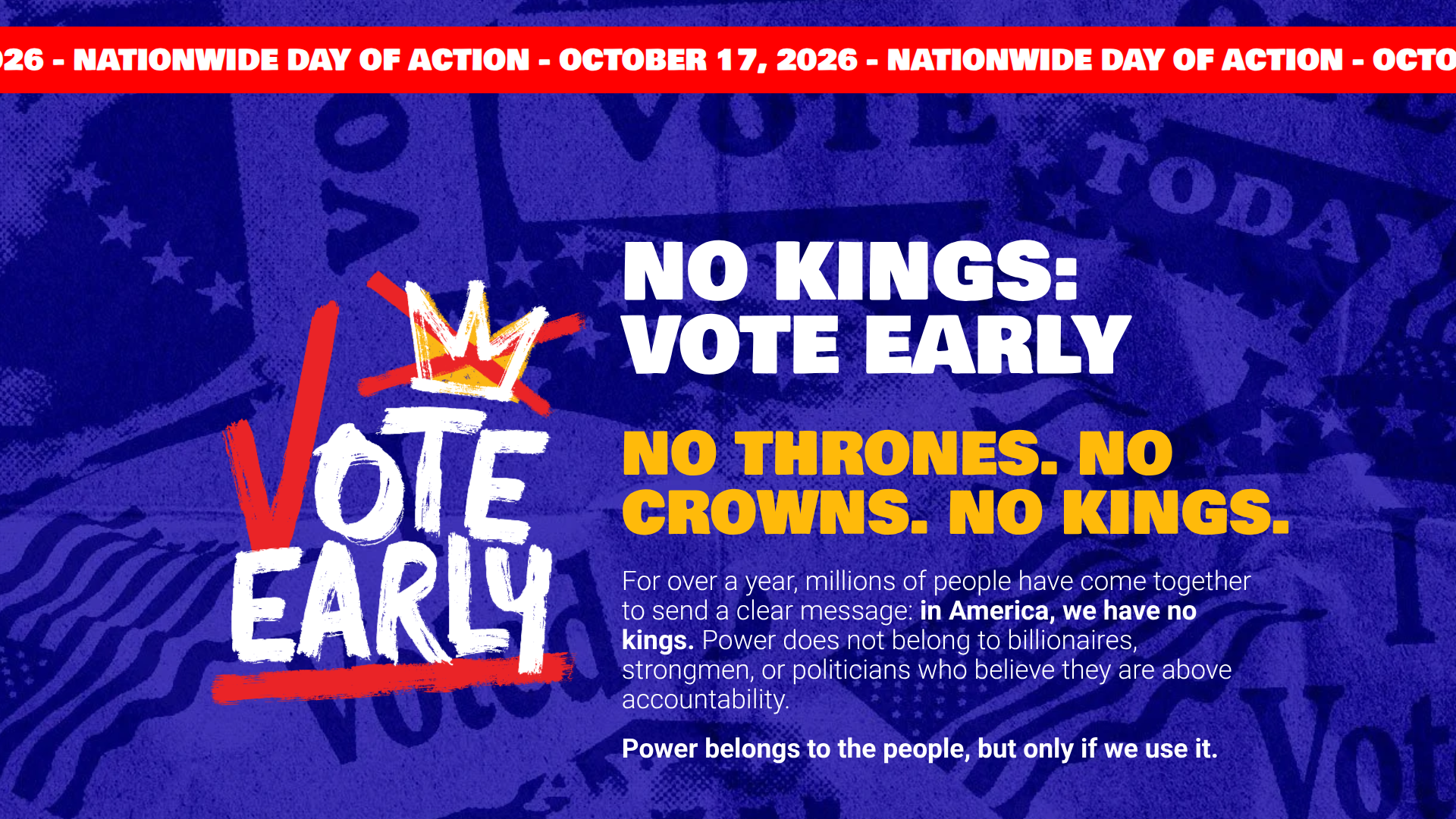
    I was, and still am, confused and curious about the next No Kings initiative of “hyper-local actions” alongside larger gatherings. I can understand the Indivisible mid-term optimism as a result of current polling data, Trump’s alienating actions, and its hope strategy but cannot ignore that I’ve been here before.

    I naively hoped that the first rally (April 2025) would capture politicians’ attention and compel substantial responses. I was more and more discouraged after subsequent rallies (June and October 2025 and March 2026).

    I objected to the way that Indivisible deployed a similar exclusionary strategy as others who critiqued mainstream Democratic leadership. I agree with the need for this specific critique, and support such critiques generally, but I wish liberals would lose their purity tests, and their political hypocrisies, and instead emphasize cross-community coalition-building.

    Then I read Jill Lepore’s most recent book about the Constitution. This book, which won the 2026 Pulitzer Prize for history, offers an account of this foundational document that focuses on the part played by people in the pursuit of a more perfect union.
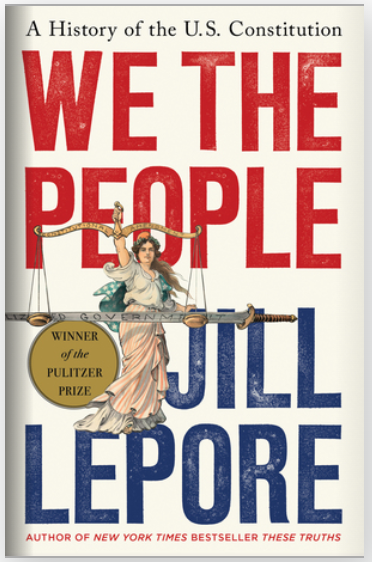
    The Constitution according to Lepore was designed as both a resistance and means to change. Central was the assumption that this document would not be preserved in its original form at all costs but that it would consistently and constantly updated and changed through amendments and other ways by the American people.

    Such a perspective, which she painstakingly establishes, is also clear in her critique of originalism. This interpretive strategy, which is predicated upon the search for the original intention or meaning, reinforces the impression of an artifact or relic to be preserved rather than a principled process for adaptation and change.

    This book, which some consider Lepore’s best, isn’t my favorite one of hers. Nonetheless, it convinced me that the American political system is a participatory sport, and not something seen from the sidelines.

    And it restored my motivation to reconnect with No Kings, Indivisible, and other political organizations that are calling out and challenging the corruption of this current administration, its Congressional enablers, and my fellow Americans who voted for them.

    Benjamin Franklin’s qualified answer to that Constitutional Convention question seems as relevant today as ever.
  • Ample Abundance

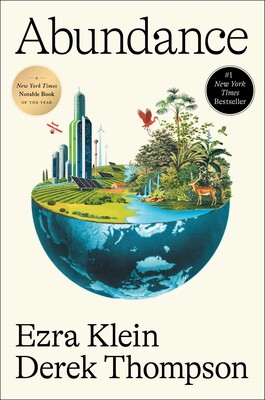
    Ezra Klein and Derek Thompson (2025) in their recent co-authored book offer an assessment of and an alternative for the American political state of affairs.

    Klein and Thompson criticize both Republicans and Democrats for different and similar reasons. Conservatives for example cannot acknowledge the limits of markets for example and call for small government while embracing large policies. Liberals for instance privilege process over outcomes and embrace political solutions but reject these for their own communities.

    Both more importantly misunderstand the economy and endorse scarcity. A better approach they argue is less concerned with the size of government or the politics of identity and more with capacity and outcomes, and assumes abundance.

    This underlying assumption arises from their observations that substantial changes have slowed and that big ideas are harder to generate. These and other conditions they suggest reflects a general failure to build, invent, and even dream of solutions, which lie at the center of their abundance approach.

    Their perspective as some have noted (e.g., Kazis 2025 or Teachout 2025) is short on specifics. However, such a criticism misunderstands the purpose of this book, which is to critique conventionally liberal perspective, and the larger context in which this exists.

    In this more limited goal, their book seems sufficient. Such an opinion seems validated by others who have used their account to organize regional and national events. Its usefulness even extends to politicians elsewhere, which is an additional endorsement.

    Anything that attempts in other words to account for the sclerotic political present and offer an alternative, and hopeful, future is enough return on the time invested in reading it.

  • Neocons Anyone?

    I’m unsure whether America needs to bring back the neocons as David Brooks (2025) argues, but I think he is right to highlight a missing ethical aspect to conservative politics today, which could serve as a corrective to the current Republican party.

    I realize that these values needn’t necessarily come from neoconservatives who came together as he suggests in the 1970s and later supported the Iraq War (18-29). At the same time, I think that the current conservative party offers little to convince voters that they have moral values, such as “basic decency” or “showing up on time, working hard, being there for your neighbor, listening with curiosity, respecting traditions” that Brooks recommends (21).

    Too many politicians prioritize party over principles, which reflects the value of retaining power at all costs rather than supporting the best for our communities and country. Without clear shared principles, conservative politicians will never get my vote, or even convince me to consider their perspectives even though I believe that a viable conservative party is essential to a functioning democracy.

    My objection to Brooks however is the absence of any accountability or even accounting for current political conditions. Such an aspect would include not only a president who adds partisan plaques beneath former presidents’ photos for example but also a partisan Supreme Court that promotes outcomes that are inconsistent not only with the U.S. Constitution but also some justices’ previously espoused beliefs.

    This aspect isn’t as important for consequences although those have their place in any justice that attempts to restore trust. Rather, it is a practical component to convince at least some of us that any effort to rebuild what current conservatives have dismantled and destroyed is worth the time and effort that doing so would require.

    Otherwise, we might sit out at least until we can be convinced that what has recently happened — everyone knew after his first term what Trump 2.0 could be — won’t happen again at least until those of us who have lived through it are no longer around to remember how destructive this time has been.