Tag: theater

  • No Holiday For Me

    No Holiday For Me

    Chicago theater critics seem more entertained by Holiday, which has been extended reportedly by popular demand than I was.

    This Goodman Theatre production is a “contemporary adaptation” of a 1928 “classic play” by Philip Berry that had also been twice adapted into movies, including a second in 1938 with Katherine Hepburn and Cary Grant. This version, which was adapted by the late Richard Greenberg and is directed by Robert Falls, has been billed as a romantic comedy but is neither passionate nor amusing.

    Julia Kincaid (Molly Griggs) and Johnny Case (Luigi Sottile), two otherwise cautious people who meet at a no-cell phone retreat, decide to marry allegedly before Johnny realizes that Julia is a wealthy Seton, and that he already knows her siblings Linda (Bryce Gangel) and Ned (Wesley Taylor). Julia’s widower father Ed (Jordan Lage) after having Johnny investigated invites him into the family banking business.

    Julia, who is like her father, is intent upon becoming a successful businessperson and launching her own product line. Linda in contrast is still mourning their mother’s death, and Ned’s self-destructive behavior, whom she hopes to rescue.

    Julia thinks she is marrying a similarly committed professional, yet discovers that her fiancé is searching for meaning. Meanwhile, Linda and he connect, and when he cannot compromise his plan run off together once Ned has convinced her to chase her own happiness and leave him in their family home.

    The plot has all the conventions of a romantic comedy. The characters however are unconvincing in their attraction, and the performances are rarely more than amusing. The problem in part is the script although the actors seemed to be still searching for their characters.

    The set (Walt Spangler) and costumes (Kaye Voyce) were appealing but not noteworthy, especially given the budget. Other elements, such as the more current music selections and even a virtual assistant appearance, seemed jarring and out of place.

    Chicago critics generally praise production primarily in terms of the adaptation as if it alone is sufficient reason to see it. This version might have shifted the focus as one critic suggests from Johnny to the siblings, but it never sells the central romances among Julia, Linda, and him, which even this critic acknowledges.

    Moreover, it cannot get to its central themes, which are worthwhile, if it does not offer a plausible premise, Why would these characters, who otherwise conduct online searches for other information or even speak smart speakers into streaming music, not in fact know more about the people to whom they’ve pledged to devote their lives, and their fortunes, for the foreseeable future?

    I’m not suggesting that attending this performance was an awful experience, and actually did want to see more of the central question. This same critic thinks it’s the “essential paradox” of “the adult children of the American urban rich.” I however believe that it’s the amount of money that is too little, too much, and just right.

    In this, Julia and Johnny disagree. Johnny wants enough, but Linda wants as much as she can get. As such, these two characters represent a challenge within the dominant economic in the West, and most of the world, a system that has never achieved its potential for most and yet is ruining the environment for all.

    This debate is lost in the muddled mess that is this production at least when I saw it. As a result, its extension surprised me until I wondered whether it might be a way of eliciting desire in more people to see it.

    Chicago theater might be struggling in ways that are different now than usual. Still, its critics aren’t helping matters when they won’t offer more forthright accounts even when they’re writing about a late playwright, an accomplished director, and a mainstage of this scene.
  • Theater Today

    Theater Today

    I attended the final production of Manual Cinema’s The 4th Witch this past weekend, and was elated at the outset.

    I had forgotten how thrilling live performance can be. I unfortunately had sufficient time throughout the rest of the performance to contemplate the relative absence of theater in my life.

    Its presence dramatically diminished once I left a theater awards organization. For eight years, I had been a theater judge, and was seeing more than one hundred, and sometimes more than two hundred, different productions each year.

    I left the organization as a result of its lack of professionalism, and its resistance to professional development, and its leaders’ lack of integrity and ethics. I was also was concerned about the amount of time that I was spending at less than noteworthy productions, which were hours of our lives another judge reminded me that we’d never get back.

    For the first year or two, I resumed my theater subscriptions, which meant that I was attending fifteen to twenty performances a year. That effectively reduced my attendance rate, which allowed more space and time for other activities, but inadvertently increased the costs, which now included money. A single theater subscription, which could include four, five, or six performances, could cost several hundred dollars a season even for preview performances or midday matinees.

    These increased costs I admit could have highlighted the diminished quality, or could have made it more salient. Such a trend had been evident when I was still a theater judge, especially after the pandemic when theaters rushed to respond to the loudest calls for a more woke world.

    Such calls could have been coming from those who were first to return to theaters, or the ones who most often attended shows. Regardless, these calls seemed to pressure theaters into featuring the same systemic racism themes that had a long presence even before the 2020 “We See You, White American Theater” missive.

    Theater as the most synthetic of art forms has a tradition of featuring such themes, and pushing social and artistic boundaries. Such a tradition is evident in the United States, as illustrated for example in August Wilson’s call for tradition and change, and even here in Chicago, which has made numerous contributions to theater both across the United States and around the world.

    Post-pandemic American theater however seemed more concerned about placating patrons, and in so doing became too timid. Too often, snapping, and easy laughs, rippled across too many darkened theaters in response to one intellectually and emotionally insulting scene after another.

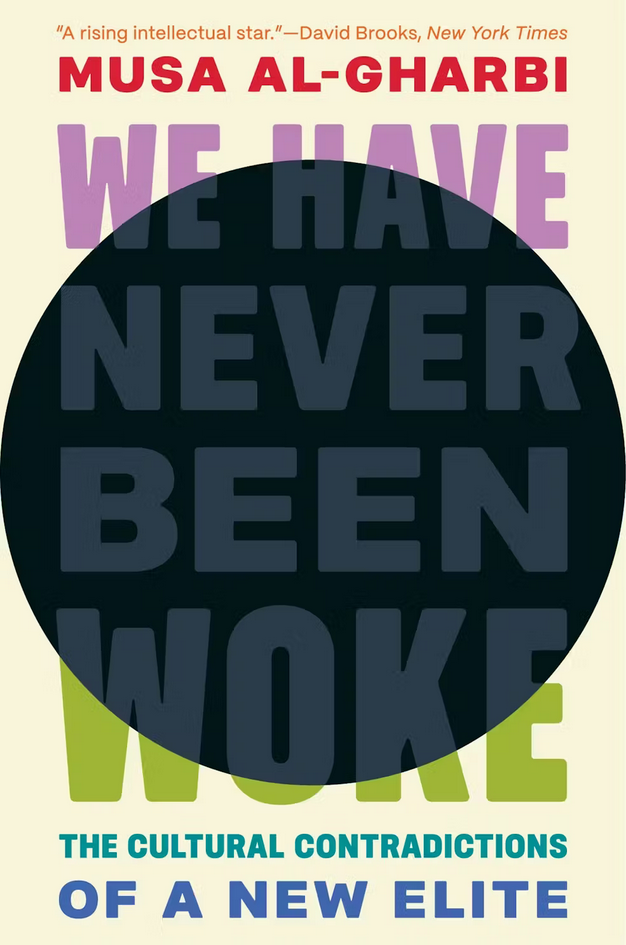
    Most theaters, or at least the ones I had long been attending, seemed to reinforce mainstream liberal mentalities, and to refuse to reckon with the never-been-woke realities of too many social justice initiatives. So I stopped subscribing.

    I still cannot rationalize these costs, especially now that I’m retired. Maybe I wondered this weekend I never will.

    The challenge confronting theaters is to some extent understandable, and a perpetual question in debates about the economics of art. Realistic answers require a careful balance of finances and function.

    Regardless, American theater could confront the political economies of theater today, and rebalance its approach in ways that don’t compromise accessibility and affordability and challenge and change. To this end, Chicago again offers ideas, such as the Hull House approach or the little theater movement in the early twentieth century or the little theater movement soon thereafter to the storefront tradition in the late twentieth- and early twenty-first centuries.

    These and other approaches offer accessible and accountable art, ones that theaters here in Chicago and elsewhere would be wise to consider. And these could mean more thrilling theater for me too.