
Author: Christopher Schroeder

  • Things That Should Be Said

    Things That Should Be Said

    I was more excited about getting to read Elizabeth Strout’s latest novel The Things We Never Say than I am about having read it.

    I tend to like Strout’s novels more than I expect, so I thought that this one, and especially its fifty-seven-year-old high school history teacher protagonist named Artie, would be even better. Artie, like so many of us, is beset by a loneliness that as its epigraph attests comes from his alienation in the midst of others.
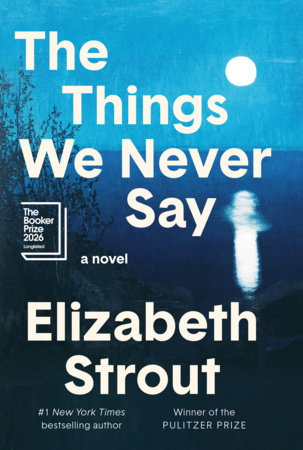
    Artie and his wife of many years Evie are struggling with the emotional aftermath of their son Rob’s car crash that killed his girlfriend. Artie discovers that his initial response, which is suicide, isn’t as appealing after he falls into the water while stepping into his sailboat, and that he actually has a desire to live, which he spends the rest of the novel trying to do.

    Other critics praise have praised this novel for many reasons, including this memorable protagonist and its cast of characters and its spare yet sharp style.

    I also admired it for its political and personal timeliness. Loneliness if social media are any indication besets the best of us, and the Trump administration antics can alienate all of us, and in that offer us some common ground.

    I additionally appreciated the intersection of character and plot, and especially Artie’s connection with his son Rob, whose circumstances push them closer and later pull them apart. One contributing cause is Evie’s secret that is exposed yet never confronted, which sadly seems so familiar.

    I could recognize the potential in other choices, such as a shifting POV that promises an unprovided intimacy. That and others reinforce the loneliness theme, and combine for a rhetorically withheld catharsis that cleverly compelled me to keep reading and unfortunately was ultimately unsatisfying.

    This condition can be seen in Artie, whose experiences that he both can and cannot change illustrate the excruciating effect of loneliness around others. His motivation however is never quite clear.

    Is Artie driven by his relative poor childhood or his current political outrage or even a righteous indignation over political and personal circumstances combined with an unavoidable awareness of his relative privilege? The answer can never be found in the accumulation of too many tragedies, one after another until the end.

    I respect Strout’s effort, and her commitment to and confidence in this project. I just believe that the book would have been better served with at least another draft.

    The loss is all that this book could but doesn’t say, which is even more lamentable in light of its final paragraphs and our current circumstances.


  • Needs a North Star

    Needs a North Star

    I’m surprised that I didn’t like Northern Lights (2023) more than I did.

    This streaming series, which is an adaptation of a play by Stephen Jones, tells the story of two grieving strangers Áine (Elva Trill) and Lloyd (Jones) who connect through their tragedies. Áine is standing in the rain on a bridge outside Lloyd’s apartment after his estranged girlfriend Denise (Jennifer Heylen) asked him to leave their home in the emotional aftermath of their newborn’s sudden death.

    This bridge is where Áine’s boyfriend Seán (Jay Duffy) jumped to his death. It’s also where Lloyd had spoken to him just before he jumped and where Denise previously had been talking to him, and where Lloyd saw them from his window when Denise lied about why she was late to dinner he had prepared.

    I typically like adapted plays perhaps because these stories seem more substantial. However, I thought this story, which might have worked as a two-hander tragicomic play, had been stretched too far across six episodes and almost 300 minutes, and past the point of ripping and tearing.

    I also was skeptical about the coincidences, especially in the Dublin setting. Greater Dublin, which is visually appealing, reportedly includes two million people across 2,500 miles. That though doesn’t prevent these characters from meeting on the same bridge at similar times.

    I additionally couldn’t overlook the representation of The Catcher in the Rye. This 1951 novel by J. D. Salinger, which also features a grieving narrator, gets its title from its narrator’s misunderstanding of a poem, which reinforces his inability to manage, or even recognize, the grief that alienates him from everyone, contributes to his emotional breakdown, and explains its mental health setting.

    In contrast, Áine and Lloyd and even Denise ostensibly confront their grief and reconnect with their loved ones. This contrast however is never acknowledged, and seems unclear, even though it could have contributed in more than one way to this story.

    These prevented me from connecting with this story, which might work on a stage somewhere but doesn’t do so on a smaller screen across six episodes for five hours.

  • Nowhere to Go

    Nowhere to Go

    Motor City is an unnecessary movie with little entertainment value.

    This crime drama, which was written by Chad St. John, offers a familiar story. A small-time drug dealer (Alan Ritchson) who falls in love with a more powerful dealer’s (Ben Foster) girlfriend (Shailene Woodley) is falsely imprisoned, escapes with help from his friends, and spends the lives of this girl and his friends, and the rest of his life, obtaining revenge.

    This movie, which is set in 1970s Detroit has next to no dialogue, which obviously foregrounds the acting, designing, and directing (Potsy Pocirocoli). These elements strain and crumble under the pressure.

    The most convincing performance is Woodley’s, who plays a supporting character. The leads are often comical.

    The settings sometimes evoke 1970s Detroit even though the movie was filmed in New Jersey. The problem is that this setting has little if any significance to the story unless it vaguely suggests something mechanical about the main characters.

    The costumes were conventionally cliched. The sound design, and the classic 1970s rock sound at its center, is often loud, and seemingly supposed to support the narrative although again in unclear ways.

    These limitations and others suggest questionable directing decisions. These are limited however by the predictable plot and cliched script.

    I initially wondered whether the story was just starting slowly, and soon suspected that the dialogue restriction was an intentional challenge. If so, it was more than this movie could meet, which makes it both unappealing and unnecessary.