Category: international

  • A Bigger Bite

    A Bigger Bite

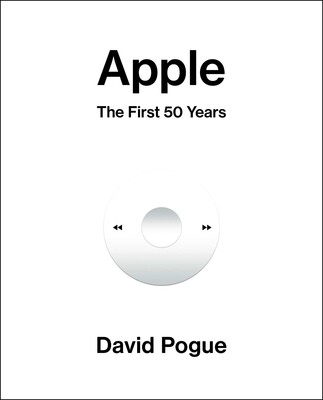
    The recent of history of Apple by tech and science writer David Pogue is a useful addition to accounts of this company that initially seemed unremarkable, later seemed doomed, and yet has transformed human experience, and continues to do so.

    Pogue conducted 150 interviews for this coherent, and credible, account of what could be the most influential of the MAGNA (FAANG) companies. This review also clarifies misunderstandings and adds insights for a more comprehensive of the first US company with a $1 trillion valuation (2018), which rose to $4 trillion last fall.

    Pogue’s seeming exhaustive account is deeply detailed, and its lavish production quality reflects the Apple aesthetic. Glossy pages feature appealing layouts with big blocks of texts and frequent sidebars, which sometimes seem gossipy and occasionally disruptive.

    Many regard this extensively sourced book as serious journalism that will appeal to tech and business readers. Apple fans I believe will appreciate the deluge of information, and anyone whose impressions begin with the first iPhone (2007) or even the “Think different” campaigns (1997-2002) will be able to add to their understanding of this global company.

    An obvious limitation, which applies to most print products, is that it is relative static, which means that it is already outdated. Its release for example was soon followed by the announcement of the current Apple CEO Tim Cook’s imminent retirement and its next CEO John Ternus, whose hardware background could alter the trajectory of this company.

    A bigger problem in my opinion is the way it most avoids larger contexts that would situate Apple in relation to other Big Tech companies or even internet history. These contexts could consider the effects of Apple products on users for example or cultural norms.

    This issue can be illustrated in the expansion of corporate control over hardware and software with iTunes (2003), the App Store (2008), and iCloud (2011), which included streaming services in Apple Music (2015) and original content with Apple TV+ (2019), and which were bundled as Apple One (2020). Apple in doing so isn’t different from other Big Tech companies, and yet by combining hardware, software, platforms (iMessage, e.g., or FaceTime), and services is more effective and I believe more dangerous.

    I appreciate the account of this company from its founding by Steve Jobs, Steve Wozniak, and Ronald Wayne in 1976 and its later struggle with Microsoft over market share and even itself over product clarity. At the same time, I expected more, such as the way it locks users into its products and exploits network effects that can harm not just the internet as others (e.g., Doctorow 2025) suggest but also I would add users, culture, and society.

    That however would be a different book, and might require a different author. The question of whether long-form journalists who offer histories have the same obligations as historians is a debate for a different forum and different day.

  • An Internet For All

    An Internet For All

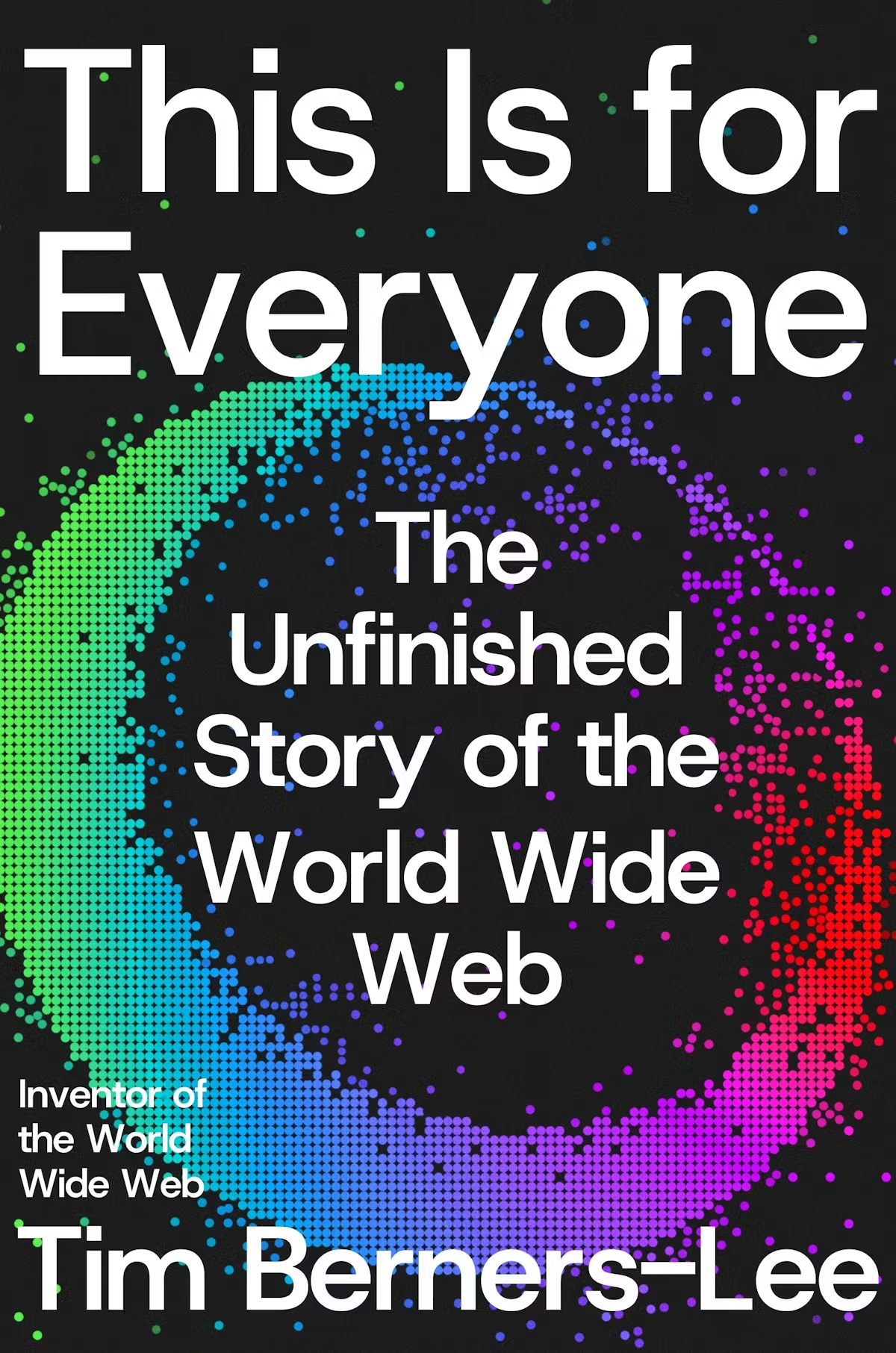
    Tim Berners-Lee’s (2025) recent memoir, which he co-wrote with Stephen Witt, is an invaluable account of the invention of the internet and useful counterbalance to mainstream accounts of it.

    Berners-Lee recounts his experiences from imagining a world-wide web, convincing CERN administrators in 1989 to support his proposal, and its stunning evolution since then into the backbone for contemporary digital life. He also considers other central concerns, such as content moderation, platform monopolies, and artificial intelligence, along the way.

    Central to this account are the central principles in Berners-Lee’s original vision. This vision was, and still is, an open network as a positive tool for human connections that is available to everyone, and not controlled by any single institution or individual.

    I was elated to learn that the internet inventor is still promoting an open and accessible space. He touts for example open-source software and federated platforms, such as LibreOffice and Mastodon, and he is developing personal data pods or wallets, and in so doing promoting data sovereignty.

    I was particularly interested near its end by his distinction between attention and intention economies, or what we’re currently experience and what he envisions for us. In doing so, Berners-Lee rejects both AI-doomers and AI-boomers — he acknowledge challenges and dangers, and criticizes the profit-driven approaches, but embraces the relative advantages — and advocates for in an AI-era reset.

    I found the rhetorical approach to be too episodic at times. One moment is followed by another and then another, and these are compiled and then offered as significant, and too infrequently connected to larger themes.

    I wanted more interpretation, synthesis, and conclusion from such a visionary and hopeful thinker. That though doesn’t mean he isn’t offering a vision of a different digital world, one that is also evoked by recent antitrust lawsuits against Google for example and Apple and successful verdicts against social media companies.

    Surely the one who imagined a networked world must be proud of his creation, and those who continue to develop it.

  • More Than That Please

    More Than That Please

    I saw Send Help, which is more aptly titled than I realized.

    Linda Liddle (Rachel McAdams), who is a useful and reliable if also awkward employee, has been promised a VP promotion by the CEO who has recently deceased. This promise, which was known to other senior employees, is broken by the CEO’s son Bradly Preston (Dylan O’Brien), who assumes his father’s position.

    The company needs help however with a merger, so Linda is asked to accompany these senior employees and the new CEO on a trip to Bangkok. She can according to Bradley teach his former frat bro Donovan (Xavier Samuel) what she knows and then be reassigned from their corporate headquarters to a satellite location.

    Linda is drafting a merger memo on the flight while Donovan plays her survivalist reality show video application for the rest of the group. She eventually realizes why they’re laughing and then deletes her draft just before the plane in an unexpectedly graphic scene begins to disintegrate after an explosion and crashes, and sinks, into the ocean.

    The only other survivor besides Linda is an injured Bradley, whom Linda rescues and helps recover. Her survivalist hobby obviously becomes relevant, and affords her an advantage, as does later her former marriage to an abusive husband whose death she stopped preventing.

    Linda, who cannot save Bradley from a two-dimensional caricature, ostensibly develops her heretofore type character with this account of her part in her late husband’s demise, which could influence the last third of the movie but remains underdeveloped at best. As a result, it seems like an add-on, or an empty gesture in this survivalist horror thriller, which is how it is described.

    Linda’s motivation remains a mess even at its end. Why would she sabotage their rescue even if she was relying on the resort home she had discovered? And could the conclusion reinforce an impression that she has parlayed her time stranded on this island into the self-serving career that she despised, and we presumably are to despise, in Bradley and his bros?

    Critical consensus nonetheless is quite positive. More than 260 offer sufficiently positive reviews for example to earn it a Rotten Tomatoes certified fresh film status. Those who recommend it consistently cite the director Sam Raimi, the entertainment value of this movie, and its professional validation for those with bad bosses in their generally positive reviews.

    Surely these reviewers, and the industry, think more of audiences. Or maybe that explains why the movie menu is so often filled with so little appealing.

    We need more than that.