Category: local

  • Criticizing the Critics

    I had concerns about the Chicago Sun-Times even before its most recent AI-related fiasco.

    The newspaper seems to have diminished in quality and quantity since I started subscribing. More recently, it seems to be moving away from the opinion business.

    This shift seems more than refraining from candidate endorsements as is reportedly required of nonprofits. In fact, it recently stopped publishing editorials after losing much of its editorial board to survival by-outs.

    Since then, it has haphazardly offered op-eds, including some regular columns. These most consistently appear on Sundays although the weekly total number (and quality) seem to be decreasing. Some days have none, or at least none I can find.

    This number is but one inconsistency. Others are offering these opinions in consistent spaces and even including an opinion section in its TOC, which sometimes includes columnists by their names or even not at all.

    A bigger problem is the effects upon its identity as a newspaper. Some suggest that newspapers serve three functions — corroborating facts, curating content, and offering opinions (e.g., Rose-Stockwell [2023], 261-263) .

    What happens to newspapers that abandon one of these central functions? At what point does it cease to exist as a newspaper? And could cost-cutting efforts by eliminating these option only hasten its demise?

    I switched my subscription to the Sun-Times as soon as it announced in 2022 its partnership with Chicago Public Media. This innovative approach if sustainable has potential I believe to strengthen both this newspaper and the larger organization.

    However, I’ve been increasingly disappointed by the results. I realize that I don’t have all the information to make complete conclusion, but I do have some facts and my impressions as a regular consumer of its content.

    I can see several obvious options though to mitigate the effects of losing its editorial board. Some easy ones are establishing a consistent opinion section and including this section in its TOC every day.

    Another, which might require a bit more effort (and expense?), is amplifying existing critical op-eds. For example, it could republish ones offered by The Conversation, a collection of opinion-based accounts written by experts whose paychecks primarily come from other sources.

    None of these though addresses the need to fund the production of critical opinions, and to employ opinion-writers. These are more challenging needs but ones that must at least be considered.

    I hope the Chicago Sun-Times will reconsider its responsibility to offer opinions. Print newspapers still matter even in an attention age (e.g., Hayes [2025], 257-258), and these functions are perhaps more important today than ever.

  • A Little Privacy Please

    My kids cannot understand what I’m sure they would consider my obsession with privacy.

    They technically didn’t grow up with cell phone, and got their first in middle school. Still, they’ve spent most of their lives with these devices, and the cultural changes created by these, and they insist upon the death of privacy.

    I often ask in response why they don’t post their iCloud passwords on social media, or even give these to me. They obviously don’t and won’t but also don’t consider such stances as pro-privacy choices.

    I still advocate for the use of Signal for example as our messaging app of choice and ask about the more than 700 trackers, and almost 1,900 ads, blocked by my VPN over nine hours. They mostly ignore me.

    I was reminded this week of these different expectations in of all places a public bathroom at a prestigious private research hospital.

    I noticed the person at an adjacent urinal using his cell phone. I overheard another in a stall having a conversation, which continued at the sink — the phone was wedged between his shoulder and his ear — and as he left.

    Such experiences are surprisingly commonplace, and have been so for some time. I actually was once debating whether to ask someone to stow his phone as I watched him drop it in the urinal he was using and then fish it from the brackish water.

    I can understand why some think privacy no longer exists. At the same time, I fear the intrusion of these devices into all areas of human experience, and the absence of informed debates about these intrusions throughout everyday lives.

    We need to talk more about the recent Apple iCloud encryption changes for UK users or Amazon Alexa changes for everyone who uses its Echo devices. Otherwise, we are relinquishing freedoms and rights that we might wish one day, and perhaps in the not too distant future, we still had.

    Perhaps we can start with what should be obvious, and thus easy, agreements, such as cell phone in public bathrooms.

  • Hands Off and On

    To My Elected Officials and Other Members of Congress:

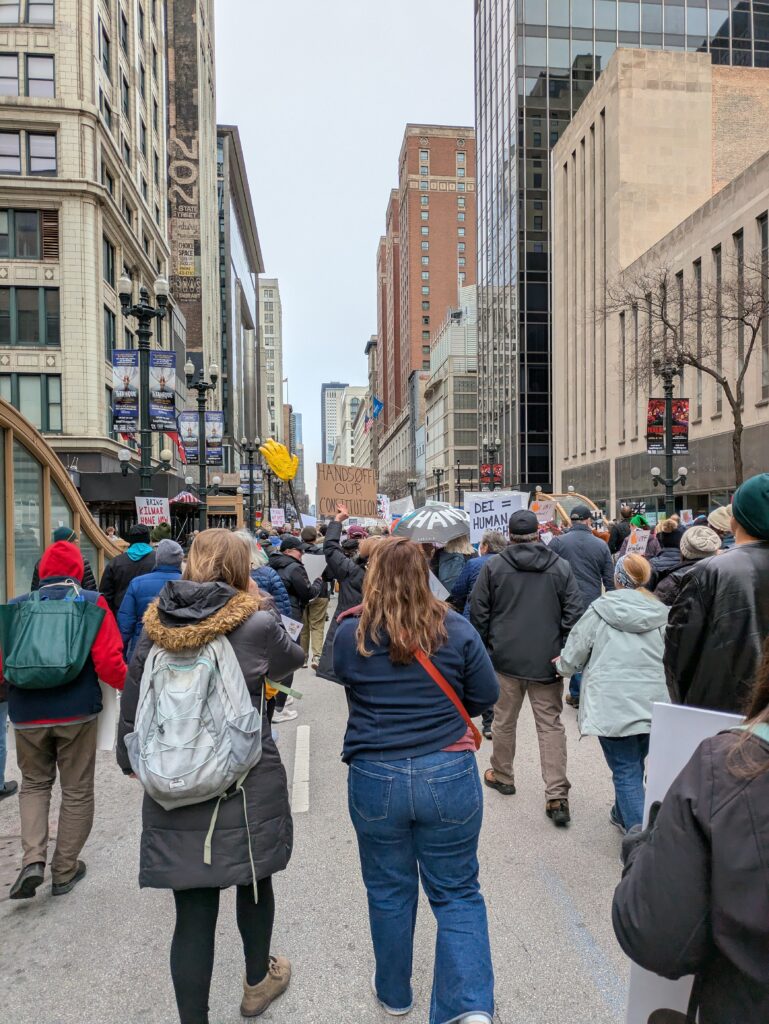
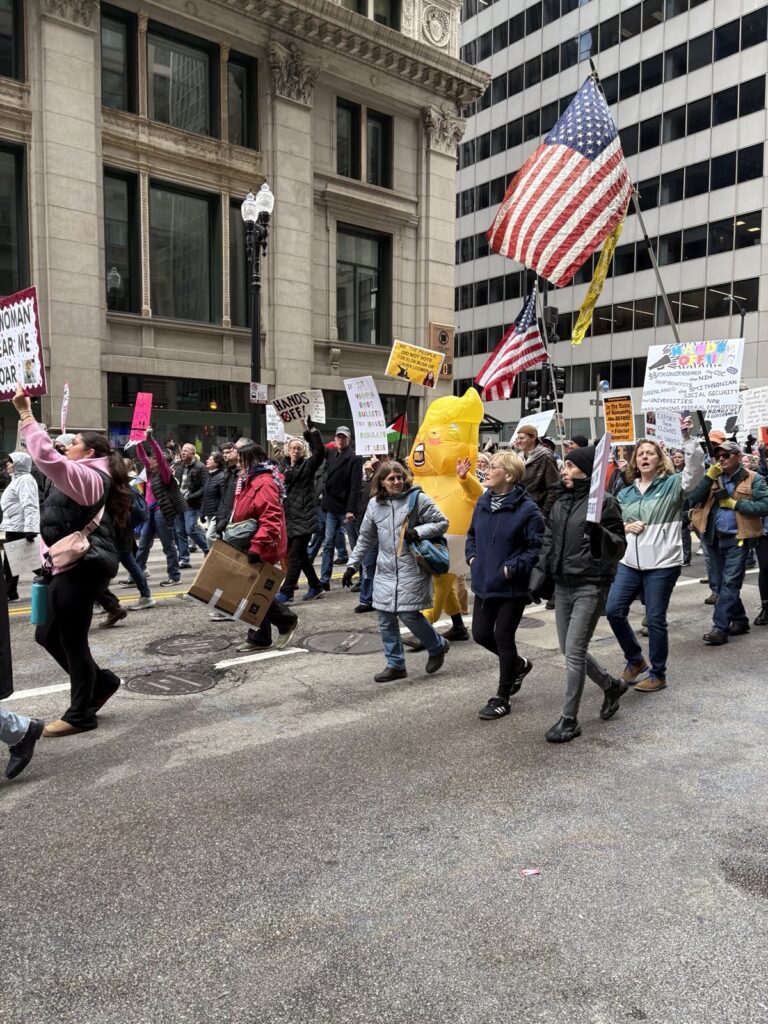
    I was one of thousands in Chicago, and millions across the country, who spent Saturday afternoon sending a message.

    This message to the Trump administration was that we’ve already had enough, and that we’re prepared to stand for the preservation of our political principles and values. Many more of us didn’t vote for you than those who did, and we insist upon being counted.

    And to our elected officials, it was that we will support efforts to resist this widespread dismantling of American ideals, and that we expect you to stand in front of, and lead, us. You can count on us, but we must be able to count on you. Anything less is unacceptable.

    That is in fact what democracy looks like.

    A Concerned Constituent and Fellow Citizen