Category: regional

  • A Money-Hungry MLB

    Major League Baseballs reminded me again at the start of spring training this year how much more it cares about money than fans.

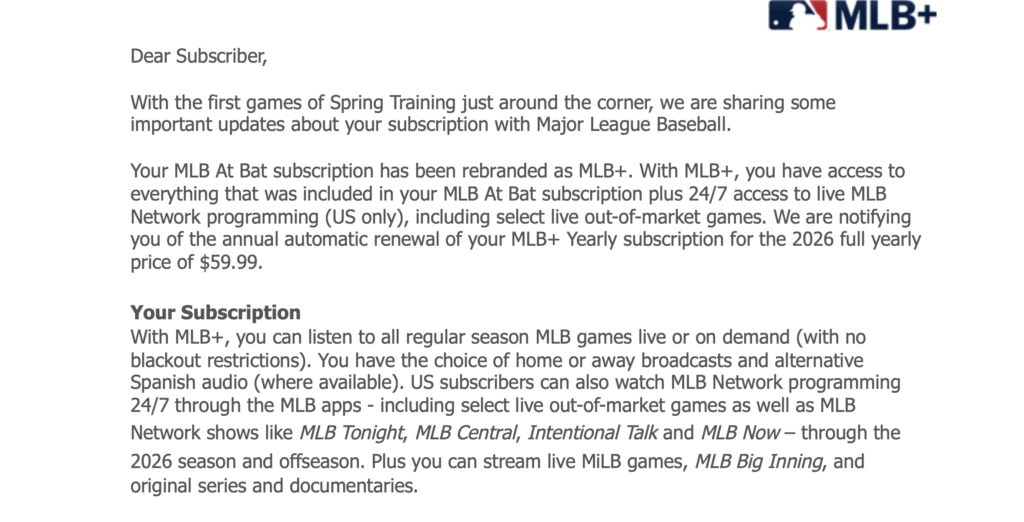
    It notified me last week that MLB at Bat, which is its online radio subscription, was now called MLB+. It also indicated that the annual cost had been doubled.

    I have always been ambivalent about this service. However, I cannot get a good AM radio signal in the building where I live, cannot find an online radio stream that isn’t substantially delayed, and am not always within the broadcast area or even near a radio.

    For these reasons, I had been reluctantly spending about thirty dollars each season, or about five dollars a month, to stream the Cubs radio broadcasts, and to listen to Pat and Ron without trouble, anywhere I was. Why not spend a little to avoid complicating one of the perennial joys of life?

    This answer was complicated by this notification from MLB. The online renewal price, which I checked after receiving this news, was still the same as it was last year, so I called MLB customer service.

    The rep insisted that MLB hadn’t actually doubled the price — it technically had more than doubled it, I guess, but why would he highlight that? — and reported that it hadn’t added any features or services.

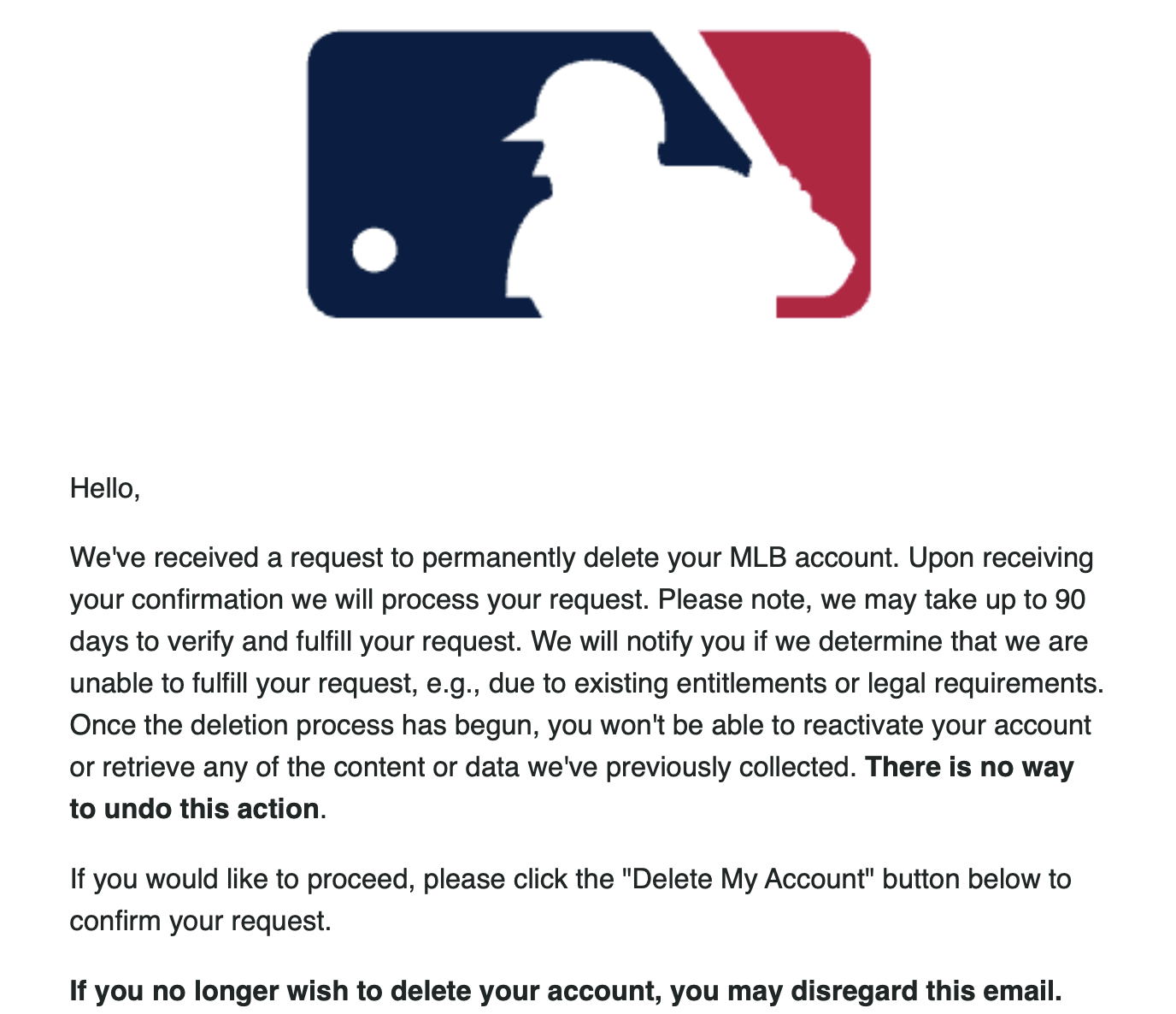
    This rep claimed he would disable my auto-renew, but I thought I already had done that. I then also removed my credit card and deleted my account.

    MLB wants its radio subscribers to spend twice as much for the same service. This one hundred percent increase moreover is happing at a time that many are predicting a lockout after this season as owners and players squabble over a salary cap, especially after the Dodgers signed Kyle Tucker in the offseason and continue spending for a three-peat.

    Such disregard for fans isn’t new. Major league baseball for example has had nine strikes or lockouts since 1972. The longest, which occurred in 1994-1995, canceled 938 games, and the entire 1994 postseason. The most recent, which happened in 2021-2022, didn’t cancel any games but delayed the 2022 opening day.

    This disregard appears in other ways. For example, the Chicago Cubs and the Chicago White Sox have their own sports networks, and now charge local fans who want to watch games from the comfort of their living rooms, which many previously had done on free television, about twenty dollars a month.

    Neither even offers good reasons for such expenses. The Cubs have lost the division title to the rivals Brewers or Cardinals, who play in smaller markets, for the last five seasons. The Sox have lost over one hundred games for the last three.

    The problem is that enough fans will likely spend for the radio and television subscriptions, and the tickets, concessions, and merchandise. Such expenses, whatever the costs, seem especially appealing in the middle of February.

    I however might have an alternative this season. One of my kids recently gave me a solar-or-crank-powered portable radio with an extendable antenna. With it, I might be able to find a crackly yet discernible sound of the play-by-play from Hall-of-Famer Pat Hughes, who will begin his forty-third season calling Cubs games, and his most recent partner, and former Cub from the metro-Chicago area, Ron Coomer.

    I gotta get cranking, and searching for the strongest signals. Spring training games start tomorrow.

  • Sunnier Days Ahead?

    I’ve known for weeks that I need to make some difficult decisions about newspaper subscriptions.

    I currently have daily Chicago Sun-Times delivery, and also receive the Chicago Tribune on Sundays. I also prefer print versions although I’ll read the Tribune opinion articles on a tablet throughout the week.

    I had traded the New York Times for the Tribune soon after moving to Chicago more than twenty years ago. I switched to the Sun-Times in 2022 after it became a part of the Chicago Public Media.

    Since then, the Sun-Times has lost much of its allure. More journalists for example seem to be doing cross-over work for the CPM radio station. Also, it recently dissolved its editorial board, and stopped producing editorials, and has fewer op-eds, and some days none at all.

    At the same time, the Sun-Times informed me that it was increasing its cost. After that, I was spending more — $9.50 for the daily Sun-Times each week in contrast to $7 for daily Tribune delivery — although I was assured that it would reduce my rate to $7.70 / week, which only raises more questions about the ways the Sun-Times treats its subscribers.

    Both newspapers seem to be nudging readers to go digital. Those who wish to pay for their journalism for whatever reason will spend $7-$15 / month to support the Sun-Times or $5-$7 for the Tribune. (The difference is access to local coupons or events.) Both newspapers at the moment also seem to offer electronic versions of its print papers for free, which raises a different set of questions about the future of journalism more generally.

    Daily Sun-Times subscription in other words costs more for less, and both newspapers are available, and more affordable, online if subscribers read these in electronic format.

    The bigger problem for me is the future of journalism. The reason I switched several years ago to the Sun-Times was to support a public media approach. I had long been impressed by the work WBEZ does, and I hoped that would stabilize and even develop the Sun-Times, which could only be good for Chicago.

    Such an outcome would strengthen the future of two competitive newspapers, which could challenge each other for their coverage. Moreover, it could expand audiences, and even offer a counterbalance to the hedge fund that had purchased the Tribune in 2021.

    Since then, I’ve been underwhelmed by this merger, which seems to have been more challenging than expected. I realize that the recently rescinded federal funding hasn’t helped, but I had assumed that Chicago Public Media would expect such an outcome, which has been a conservative goal for many years.

    I also had hoped that CPM would have resisted a reactionary response and instead would have offered a more brazen and bold reimagination of its contributions to metro Chicago and American democracy. Such a response would have reassured current supporters and inspired new ones.

    Perhaps CPM is starting to realize what it should do. Its CEO Melissa Bell, who described this rescinded funding as a “sudden loss,” nonetheless lauded the Chicago community for replacing 86 percent with “recurring community support” and to pledge a future of “true financial stability,” and twice the members, based upon a “100% community -funded model,” one that is “stable” and “independent” as if it couldn’t have had such plans in place even before that funding crisis.

    I also donate monthly to WBEZ in addition to my Sun-Times subscription, which given its free digital access seems like a second monthly donation. At the same time, I like many must carefully consider my expenses, especially as inflation increases, especially now that I’ve retired.

    Chicago is better with a second daily newspaper, and legitimate competitor. I hope that Bell and other CPM leaders know what they’re doing.

  • A Less Divisible Indivisible

    The progressive organization Indivisible, which started in 2016 as a response to Trump’s first election, persuaded more than 7 million people to march against the authoritarian actions of his current administration. However, it is risking this success with its recent response to the votes about reopening the federal government.

    This organization claims that those who marched “have been failed by the Democratic leadership again” and that the Senate minority leader has “surrender[ed].” It also argues that its members “must ensure” that this “failed leadership” doesn’t “doom a future Democratic majority” by participating in its latest primary election initiative.

    Democrats can, and should, do more to oppose this “authoritarian regime,” but Indivisible in this instance is promoting an incomplete perspective. For example, it assumes that Democratic leaders could control the outcome, which is unclear, and that such votes were mistakes.

    Reasonable liberals could have a different explanation. Some for instance might think that the Democrats tried “to protect the American people” from MAGA and the Republicans who refused to negotiate, and these politicians rejected “minor concessions,” which actually don’t address the underlying health care problem, and that they accepted the political realities and agreed to reopen the Republicans’ government (Gorn 2025).

    The reality is that options available to Democrats are limited at least until they are the majority in at least one house, including the White House, or until they can convince their Republican colleagues to prioritize principles over party, which is actually the same mistake Indivisible seems to be making.

    Indivisible web site screenshot

    The problem in other words is that Indivisible is using unrealistic and unresponsive language, and in so doing seems to have switched its focus from principles to parties.

    Indivisible and other progressive organizations must remember the realities of limited attention and air time, and in so doing select issues that have the widest appeal. The issue isn’t that representation doesn’t matter, which it obviously does, but that success cannot come from identity politics, especially the kind that appeals to small segments of society.

    These organizations would be smarter in other words to focus on the issues and principles that cross current divides and speak to the most people. In doing so, these organizations need to make such arguments, and to explain why caring for communities is always better in both practical and philosophical terms for everyone.

    Such frames and arguments might differ from one part of the country. What works in New York City for example might not work in New Jersey or Virginia. Regardless, the underlying (progressive) principles would remain the same concerns for community, which exist in foundational American texts.

    This approach increases the appeal to voters while continuing to expand coalitions, and actually is why these organizations must support competitive elections and fair maps once the recent gerrymandering surge has subsided (see, e.g., these or these).

    These together increase the chance that organizations are less likely to get lost in litmus-tests, which are often a proxy for party over principle, and more likely to have repeated and regular success. These moreover could encourage candidates to connect with their constituents through progressive principles rather than political party.

    Indivisible has brought hope to many of us, which was actually the best part of the recent No Kings marches. Standing among the thousands in Grant Park, I was reassured that so many people shared these concerns and aspirations and care about Chicago and our country.

    Perhaps that explains why I’m concerned about its seemingly unrealistic and unresponsive language. Instead, I urge it to avoid criticizing political parties, and risk reinforcing existing divisions, and instead refocus on creating the largest coalition, one of we the people that was central to who some imagined we could be, a people who were in this fight together, still trying to form a more perfect union.

    That is what Indivisible has done so well, and what it does best.