Tag: books

  • Frenemies and Families

    Frenemies and Families

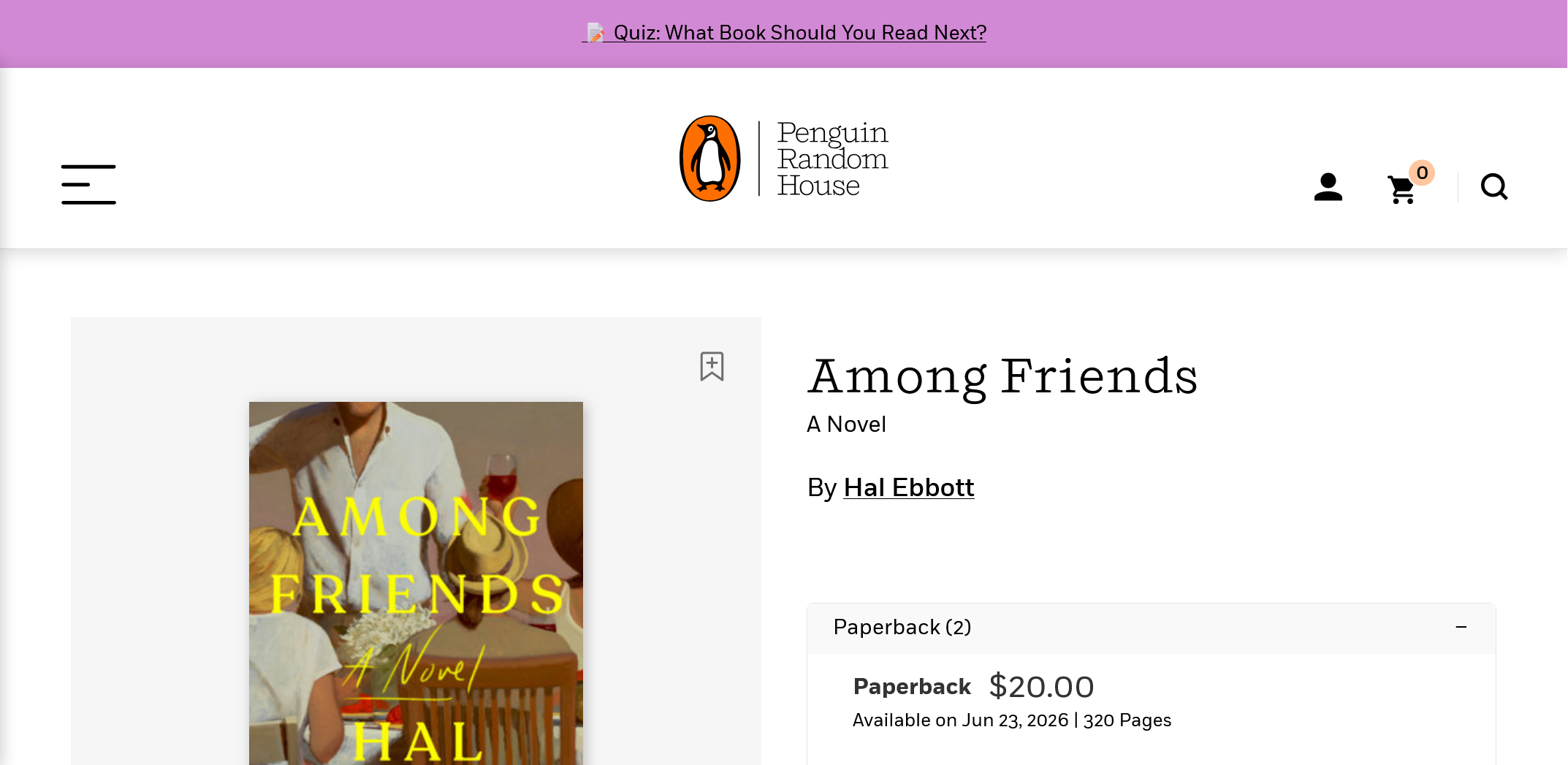
    Among Friends by Hal Ebbott is a flawed yet perhaps fascinating novel ostensibly about college friends Emerson and Amos.

    Emerson, who introduces Amos to his friend Claire, appears when Amos needs someone, which cements their connection. This connection eventually includes Claire, whom Amos marries, and Emerson’s wife Retsy as well as their respective daughters Anna and Sophie.

    book cover image

    The point of view shifts throughout the story, and attempts to establish some sympathy with all of the central characters, but at its center as the title suggests is the connection among the four of them, or at least Emerson, Amos, and Claire. These three are balanced by Retsy, who also counterbalances the pressure added by Claire to the friendship between Amos and Emerson.

    Claire, whose history with Emerson at times makes Amos uneasy, displays competing and confusing loyalties throughout the story. Emerson, who assumes that other discuss and even mock him, has an often hidden cruelty that is more revealed than developed.

    This cruelty becomes clear to Amos at the end, and catalyzes his change, which is the final focus of the plot and seems to make the novel in the end his story. For most of it, Amos exhibits a relatively uninteresting uncertainty and insecurity, which makes his eventual courage either more moving or less plausible.

    This courage comes from nowhere except his empathy for his daughter Anna, and specifically his ability to put her needs ahead of his own. As a result, Amos transforms what until that point had been embarrassing, and has been used against him, which almost redeems his emotional suffering and generates an unexpected strength.

    The problem with such an interpretation is the ending, which is too ambiguous and perhaps too rushed. Amos acts independently at the risk of his marriage, and also agrees to Claire’s proposed remedy, which is a family vacation for the three of them that he believes might salvage their marriage.

    Amos and Claire however consult Retsy and Emerson for a recommendation even as they intend once there to follow Anna’s direction. That could refer to her preferences for excursions, which is plausible, but doesn’t rule out an invitation to Emerson, Retsy, and Sophie to join them.

    This second possibility could portend reconciliation and forgiveness, which seems unrealistic or at the very least an awful possibility. I cannot comment on the proper protocol for such situation — I’m being deliberately vague to avoid revealing too much — and yet am horrified by the prospect of returning to regular interactions among them.

    Such an outcome only seems possible, and given the rest of the plot somewhat implausible. If intentional, the novel asks questions about whether we should judge others by their worst moments and if some actions permanently destroy long relationships, in which case the conclusion needs more care, and craft, if only to convince readers that they’re deliberately agitated.

    This more generous interpretation would suggest that this story starts as a slow burn only to burst however briefly into a flame, which would be reason enough to read it.

  • A Bigger Bite

    A Bigger Bite

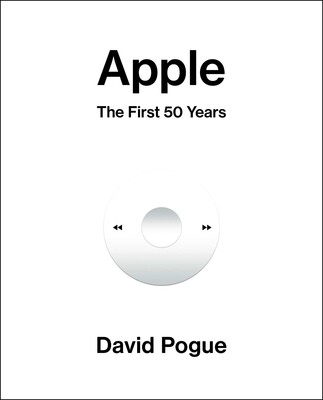
    The recent of history of Apple by tech and science writer David Pogue is a useful addition to accounts of this company that initially seemed unremarkable, later seemed doomed, and yet has transformed human experience, and continues to do so.

    Pogue conducted 150 interviews for this coherent, and credible, account of what could be the most influential of the MAGNA (FAANG) companies. This review also clarifies misunderstandings and adds insights for a more comprehensive of the first US company with a $1 trillion valuation (2018), which rose to $4 trillion last fall.

    Pogue’s seeming exhaustive account is deeply detailed, and its lavish production quality reflects the Apple aesthetic. Glossy pages feature appealing layouts with big blocks of texts and frequent sidebars, which sometimes seem gossipy and occasionally disruptive.

    Many regard this extensively sourced book as serious journalism that will appeal to tech and business readers. Apple fans I believe will appreciate the deluge of information, and anyone whose impressions begin with the first iPhone (2007) or even the “Think different” campaigns (1997-2002) will be able to add to their understanding of this global company.

    An obvious limitation, which applies to most print products, is that it is relative static, which means that it is already outdated. Its release for example was soon followed by the announcement of the current Apple CEO Tim Cook’s imminent retirement and its next CEO John Ternus, whose hardware background could alter the trajectory of this company.

    A bigger problem in my opinion is the way it most avoids larger contexts that would situate Apple in relation to other Big Tech companies or even internet history. These contexts could consider the effects of Apple products on users for example or cultural norms.

    This issue can be illustrated in the expansion of corporate control over hardware and software with iTunes (2003), the App Store (2008), and iCloud (2011), which included streaming services in Apple Music (2015) and original content with Apple TV+ (2019), and which were bundled as Apple One (2020). Apple in doing so isn’t different from other Big Tech companies, and yet by combining hardware, software, platforms (iMessage, e.g., or FaceTime), and services is more effective and I believe more dangerous.

    I appreciate the account of this company from its founding by Steve Jobs, Steve Wozniak, and Ronald Wayne in 1976 and its later struggle with Microsoft over market share and even itself over product clarity. At the same time, I expected more, such as the way it locks users into its products and exploits network effects that can harm not just the internet as others (e.g., Doctorow 2025) suggest but also I would add users, culture, and society.

    That however would be a different book, and might require a different author. The question of whether long-form journalists who offer histories have the same obligations as historians is a debate for a different forum and different day.

  • Mixed At Most

    Mixed At Most

    I hoped for more from The Mixed Marriage Project: A Memoir of Love, Race, and Family, which is the most recent book from Dorothy Roberts.

    In it, Roberts, who is the George A. Weiss University Professor of Law and Sociology at the University of Pennsylvania, offers an account of the summer she spent in a rented apartment near her Chicago childhood home where she sifted through boxes of her father’s research data, which she was bequeathed after the deaths of both her parents. She reads her father’s interviews of mixed-race married couples and reflects upon discovers about her parents, her younger twin sisters, and herself.

    Roberts’s father, who had been a Roosevelt University anthropology professor, began researching black-and-white marriages as a graduate student, and had seemingly been interested in such relationships even longer. For decades, he interviewed such couples, and was regularly assisted by his Jamaican wife Iris, whom he met when she was a Roosevelt student, and later graduate students.

    Roberts recalls that family discussions often involved her father’s research, and the book he was continually writing. She learns while reviewing these documents that he had two different contracts for this book for example but had to return both advances because he never completed a manuscript.

    Other discoveries seem more significant. For example she hadn’t realized the role that her mother had played in this project or the extent to which her parents’ marriage and even their family could have been part of her father’s research.

    These and others motivate Roberts to reconsider her college choice to identify as a black woman, and deny her white father, which could explain her reluctance to acknowledge her personal experience in her lectures and books. She also realizes that her father’s and her lifelong disagreement about race and relationships has been a persistent them in her own speaking and writing.

    Her father, who she claims never imposed his belief upon her, maintained that interracial intimacy could overcome racism, and consistently tried to convince her of that. She in contrast maintained that racism would end only when people recognize others of different races as equals, which is a prerequisite she believes for love.

    Roberts ultimately reconsiders her perspective, and admits to tempering her resistance to her father’s by the end of the summer. Nonetheless, she is still less hopeful than he, and still convinced of her own account.

    Roberts is right I think insofar that this book demonstrates the damage that race as a social construct can do to relationships and families even across generations. Her father for example waited until his mother had died to marry her mother, which then motivated his brother to disown him, and prevented her from meeting her Chicago cousins.

    I also admire her candor throughout this book, and appreciate the appeal of confronting her past and understanding its impact upon her present. I additionally can understand the way that this book could be considered the completion of the task her father started but never finished.

    Nonetheless, I wonder if Roberts not unlike her father hasn’t quite done so, if she like him still has unfinished business to complete. The reason is that this book seems more like a series of notes about and reflections upon these data and her experiences and less an interpretation and synthesis of these, which are expected of memoirs.

    This book clearly has a narrative frame — the summer Roberts spends near her Chicago childhood him reviewing her father’s research data — and an overarching insight — the complication of her race-and-relationships opinion — but needs more perspective if she intends to offer an account of her intellectual and emotional transformation. Perhaps a different organizing principle, or an additional draft, would enable her to complete the task she gave herself.

    I’m convinced having been married to a Filipina for thirty years that Roberts like her father has a book here and yet needs more sifting, sorting, and synthesizing to complete it.