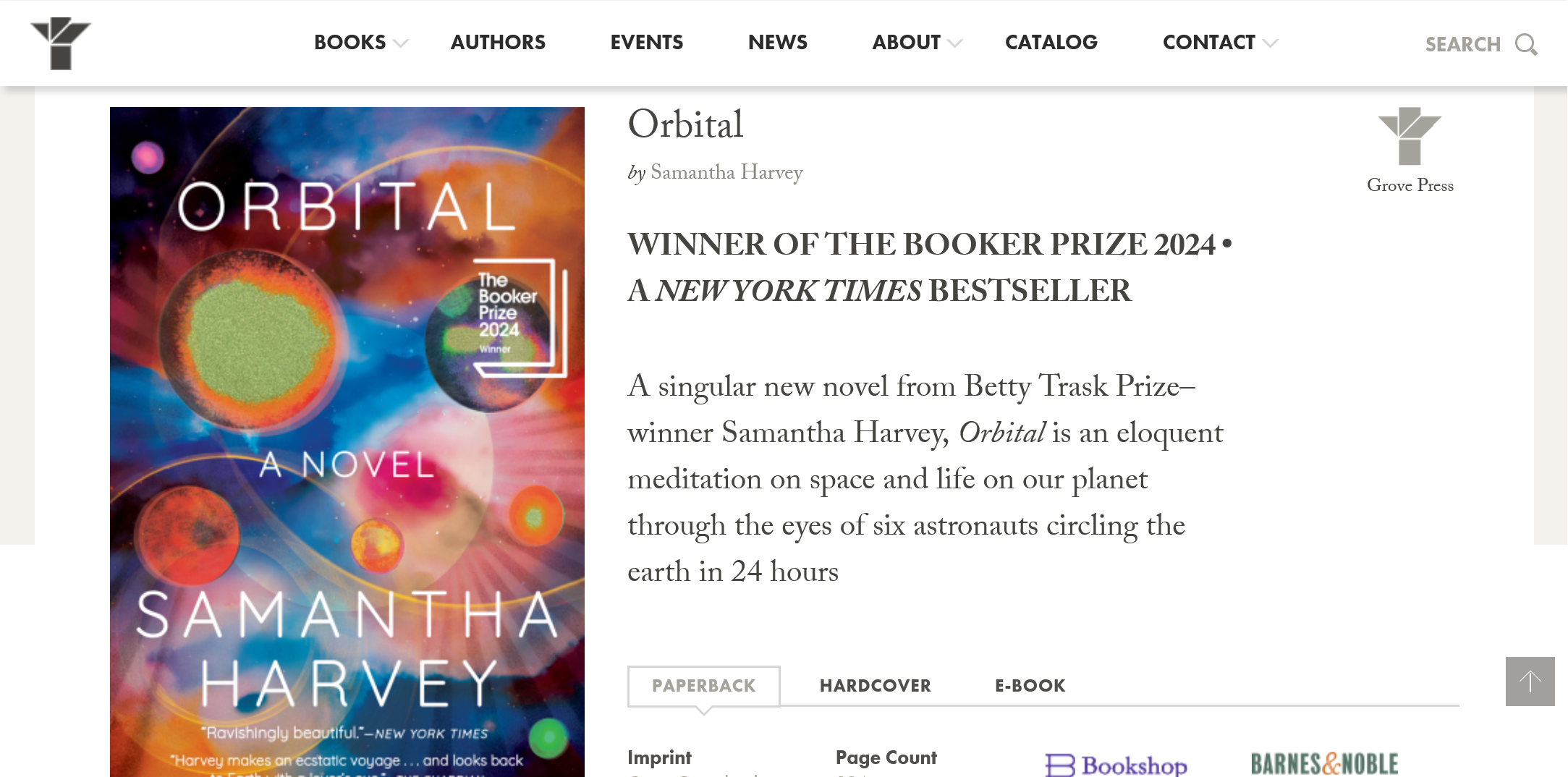
The 2026 One Book One Chicago season finale yesterday offered an opportunity for Samantha Harvey to discuss her award-winning novel Orbital, which was the OBOC selection for its twenty-fifth anniversary season.
This novel, which Harvey considers a space pastoral, describes a day in the life of six astronauts and cosmonauts from the United States, Britain, Italy, Japan, and Russia aboard an international space station. This day, which consists of sixteen ninety-minute orbits, has these characters continuing experiments, exercising and eating with colleagues, and ruminating about their lives in space and the ones they’ve left behind while a typhoon forms around the Philippines.
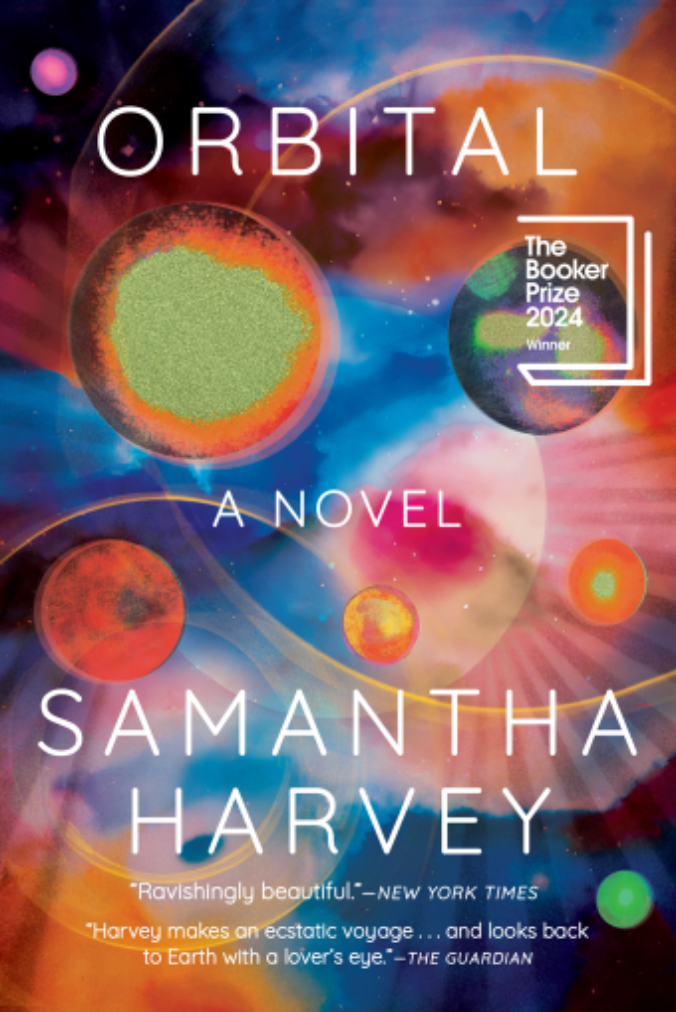
Harvey, who finished this book in the pandemic, successfully captures a sense of isolation despite consistent reminders of connection with the natural planet, which can be seen through the space station windows. These moments, which are lyrically described, vacillate between these characters’ experiences in space, which as unfamiliar seems unnatural, and their impressions of others’ experiences on the only home humans currently have.
The actions of these characters, who seem intriguing, offer little insight insights into their responses to conflicts, which often occur in the background and elsewhere. The effect for me highlights the limited plot, and also limits the development of these characters, who seem underdeveloped.
This limited plot also highlights its status as a philosophical novel, which similarly seems incomplete. This book is clearly concerned about environmental issues, but this concern still seems amorphous and general at its end, which leaves me wondering whether I’ve missed something.
The issue isn’t a dislike of idea novels — I often recommend dystopian, coming-of-age, and sci-fi stories — but rather the extent to which these debates serve the story, which isn’t the case in this situation.
This book seems more like science realism (sci-realism), and as such asks potentially compelling questions about living and loving, which are often appealing stories for me. The problem in my opinion is that these questions are never articulated, or asked, and addressed in practice, or the characters’ actions, which restricts its relevance and limits its appeal at least for and to me.
Others clear consider this book noteworthy and worthwhile — why else would it have won the 2024 Booker Prize and been the 2026 One Book One Chicago selection? — but it does little beyond impressing me as a carefully crafted day in space to settle within, and stay with, me and keep me coming back to it for more.
Leave a Reply