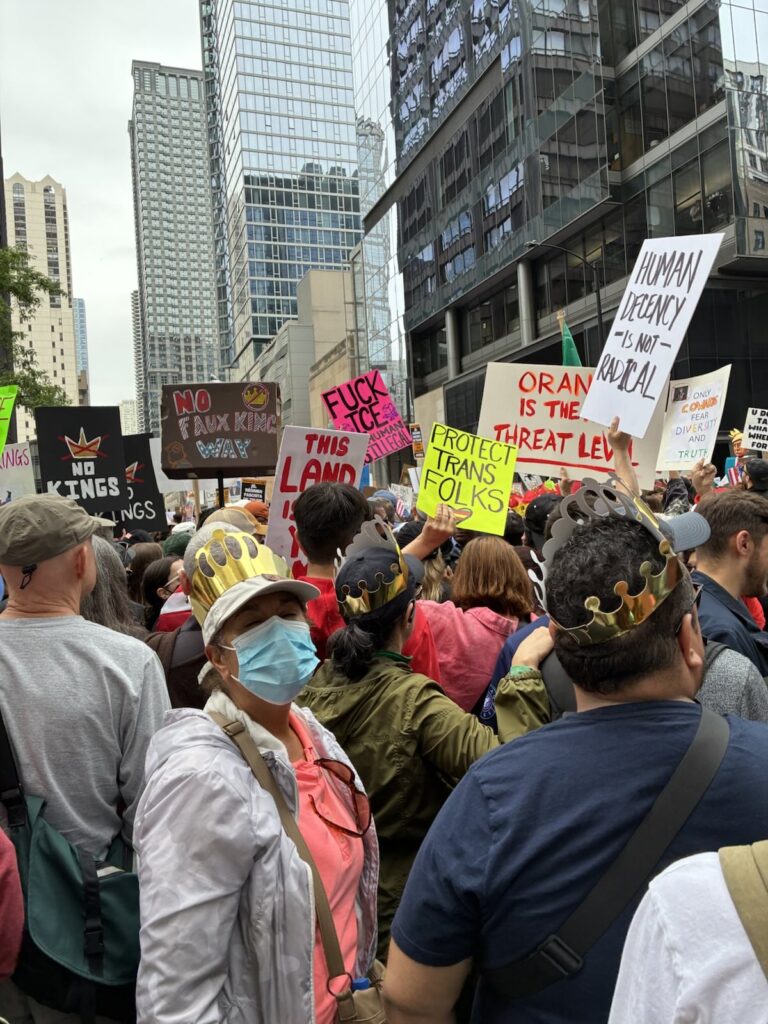
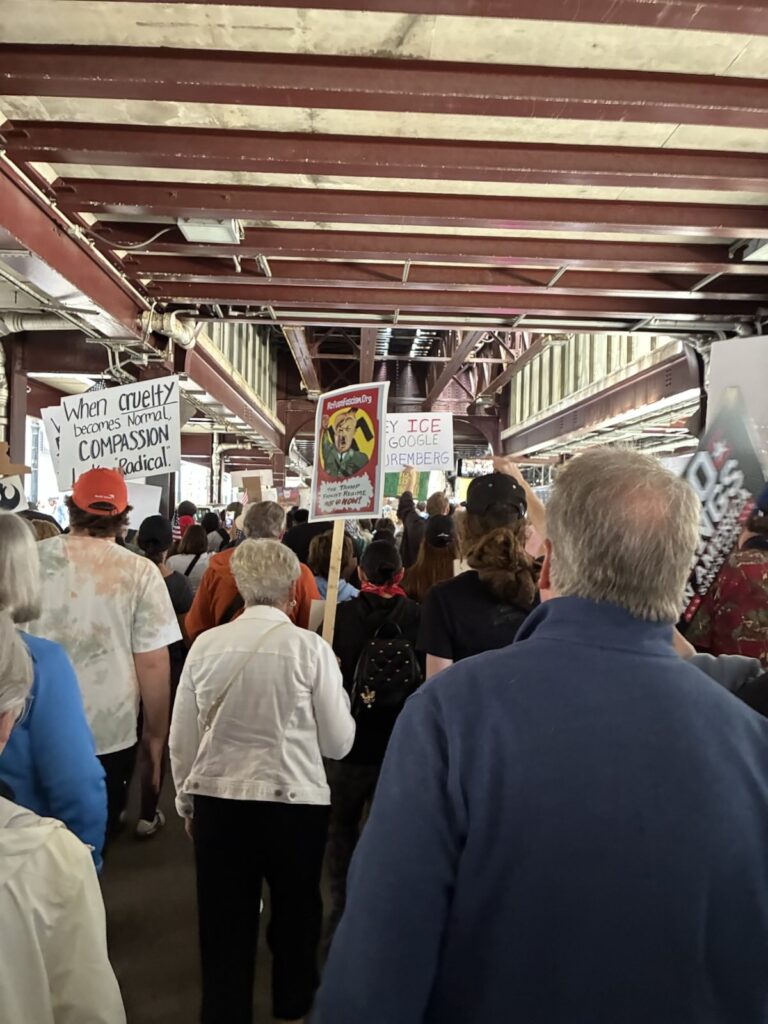

I had concerns about the Chicago Sun-Times even before its most recent AI-related fiasco.
The newspaper seems to have diminished in quality and quantity since I started subscribing. More recently, it seems to be moving away from the opinion business.
This shift seems more than refraining from candidate endorsements as is reportedly required of nonprofits. In fact, it recently stopped publishing editorials after losing much of its editorial board to survival by-outs.
Since then, it has haphazardly offered op-eds, including some regular columns. These most consistently appear on Sundays although the weekly total number (and quality) seem to be decreasing. Some days have none, or at least none I can find.
This number is but one inconsistency. Others are offering these opinions in consistent spaces and even including an opinion section in its TOC, which sometimes includes columnists by their names or even not at all.
A bigger problem is the effects upon its identity as a newspaper. Some suggest that newspapers serve three functions — corroborating facts, curating content, and offering opinions (e.g., Rose-Stockwell [2023], 261-263) .
What happens to newspapers that abandon one of these central functions? At what point does it cease to exist as a newspaper? And could cost-cutting efforts by eliminating these option only hasten its demise?
I switched my subscription to the Sun-Times as soon as it announced in 2022 its partnership with Chicago Public Media. This innovative approach if sustainable has potential I believe to strengthen both this newspaper and the larger organization.
However, I’ve been increasingly disappointed by the results. I realize that I don’t have all the information to make complete conclusion, but I do have some facts and my impressions as a regular consumer of its content.
I can see several obvious options though to mitigate the effects of losing its editorial board. Some easy ones are establishing a consistent opinion section and including this section in its TOC every day.
Another, which might require a bit more effort (and expense?), is amplifying existing critical op-eds. For example, it could republish ones offered by The Conversation, a collection of opinion-based accounts written by experts whose paychecks primarily come from other sources.
None of these though addresses the need to fund the production of critical opinions, and to employ opinion-writers. These are more challenging needs but ones that must at least be considered.
I hope the Chicago Sun-Times will reconsider its responsibility to offer opinions. Print newspapers still matter even in an attention age (e.g., Hayes [2025], 257-258), and these functions are perhaps more important today than ever.
I recently finished Emily Nussbaum’s (2024) second book — Cue the Sun! — for a book club.
Others have considered this book to be an accessible account of the “fusion of authenticity and contrivance” in reality television (Stowell 2024) and the narrativizing and gamifying of its starts (Cunningham 2024). As such, this oral history both challenges negative assumptions and exposes its “seaming underbelly” (Bell 2024).
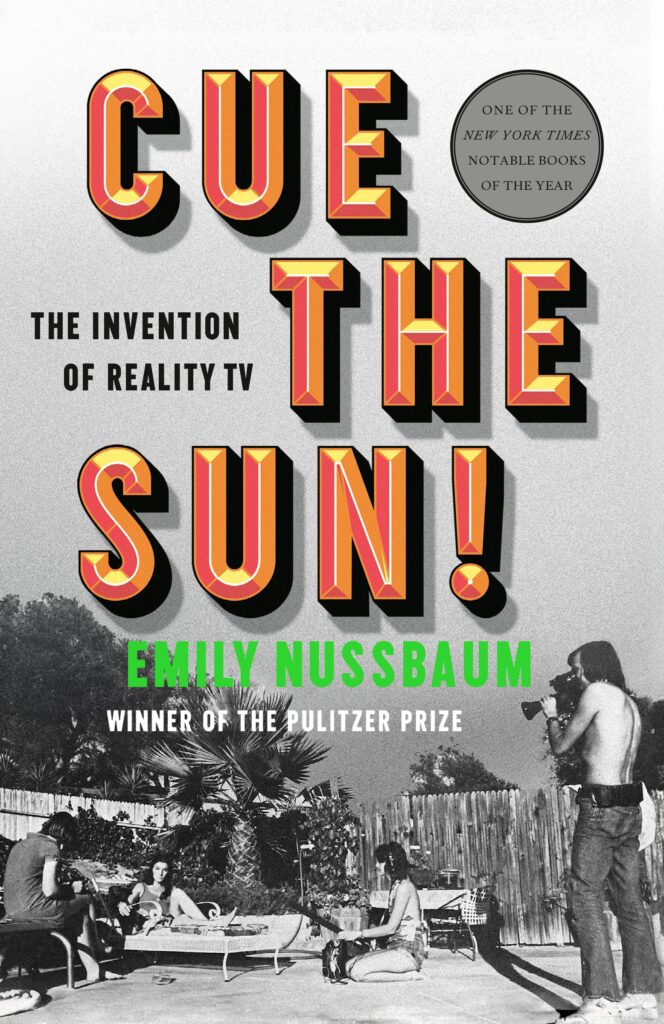
I also liked this eminently readable book, which seems to be Nussbaum’s style. I also appreciated its extensive research, including its use of insider observations of those, such as participants and crews, who might otherwise be overlooked in more conventional accounts.
For these and other reasons, I was more intrigued than I expected. For example, I wanted to know more about the messiness behind the glossy services or the choices to imitate and the willingness to fail, which according to Nussbaum are central to this genre.
At the same time, I wanted more consistent context, which others have noted (e.g., Bell 2024). I found such perspective useful early in the book for instance in her discussion of An American Family (i.e., chapter three), but I wondered on more than one occasion about moments when it seemed supplanted by personal dramas within programs or behind the scene.
I also was hoping for more synthesis in its conclusion, especially after the detailed and documented analysis throughout most of this book. I was actually disappointed by the final pages that almost seemed perfunctory, and not quite worth the effort I had made to get to these.
Both can be seen in The Apprentice chapter (i.e., chapter thirteen). I hadn’t realized how much this program had rehabilitated Donald Trump’s image, and in so doing repackaged him for his initial presidential run. At least some of his second term is obviously indebted to his first, but that might not have been possible without his makeover from this reality show.
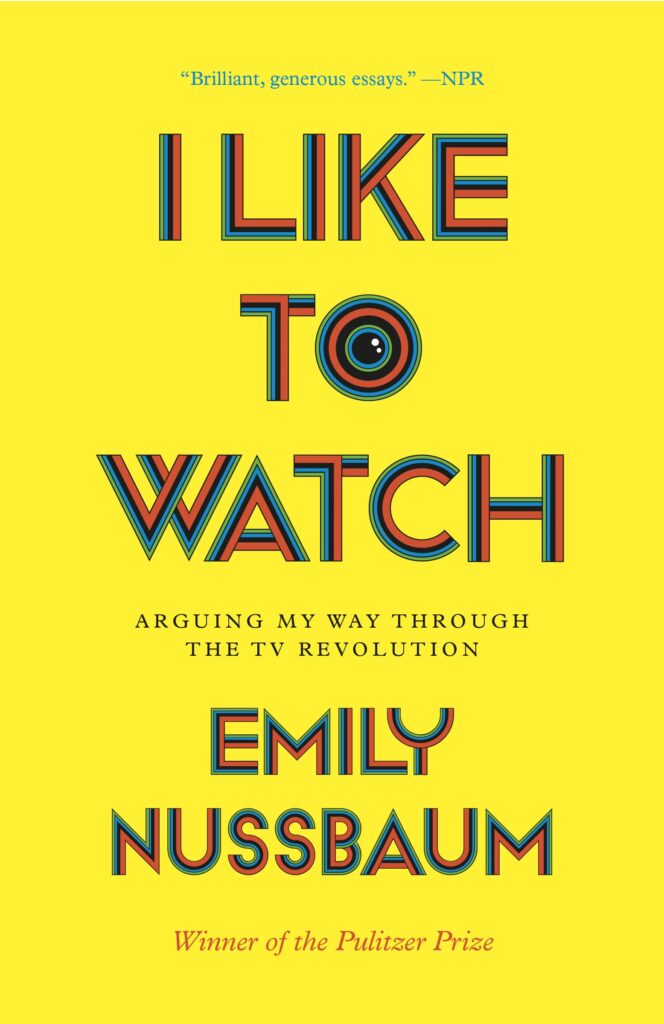
However, I was reminded of, and grateful for, her thoughtful approach to pop culture that I had encountered in her first book I Like to Watch.
Its title was a declaration and a challenge. Its content was even more so.
I was raised in a home where television for religious reasons had been banned. As perhaps a result, I never developed an informed perspective on it, a condition that was reinforced in graduate school. Television as a child was evil and after grad school also insubstantial and thus inferior.
Not until I read Nussbaum’s first book did I recognize how misinformed I was. Her accounts of The Sopranos for example and other programs fascinated me. Her populist, and personal, aesthetics, and her intellectual ethics, resonated with me, and reinforced instincts that until this book had been overwhelmed and lost in the din and noise.
In this and other ways, she reminds me to be more tolerant and thoughtful, and honest. She also suggests a significance for anyone who is willing to meet the public where it is, and to use tools and training to think more critically and carefully about the cultural content we’re consuming and the concomitant worlds we’re envisioning.
What more could I expect?